

29 Sept 2025
Cryptocurrency is rapidly gaining popularity, with individuals achieving significant wealth overnight and major global figures embracing digital assets. Despite its complex and risky perception for many newcomers, this lesson aims to demystify crypto, explaining its functionality, types, and the vast opportunities it presents for investment and wealth creation.
Cryptocurrency has entered mainstream awareness, with figures like Donald Trump launching meme coins and individuals reporting significant financial gains. Many people, however, perceive crypto as a complex, risky, unregulated, and new technology, leading to fear and confusion. This lesson provides a straightforward explanation of how crypto works, its various uses, the types of cryptocurrencies available, the security aspects of engagement, profitable strategies, necessary starting capital, and the industry's future.
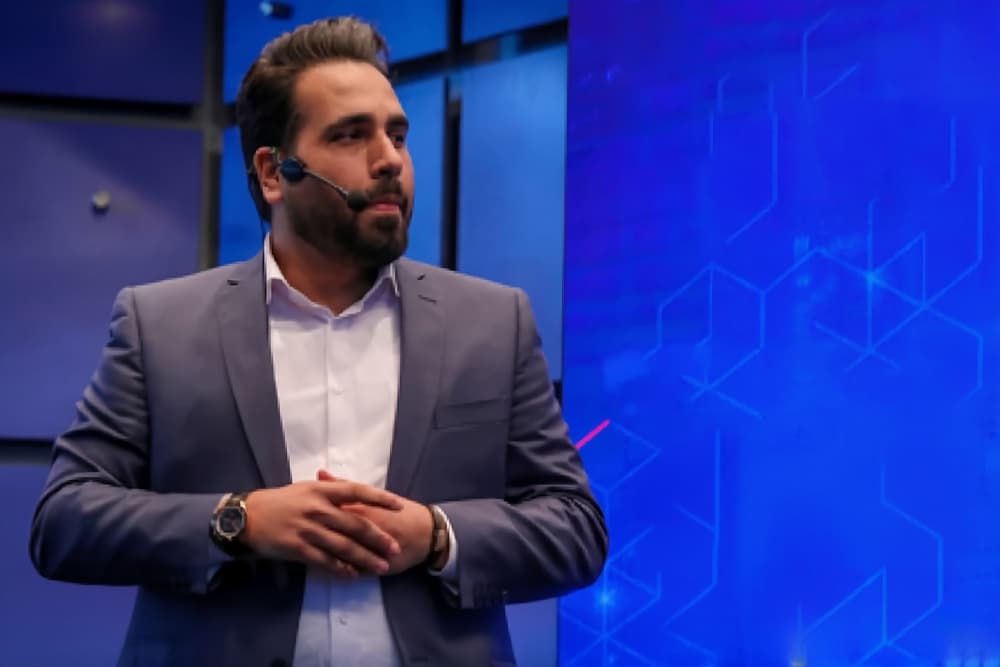
Thomas Crlo, with 10 to 11 years of experience in traditional financial markets, initially lost a significant portion of his capital before developing a robust trading strategy. His extensive study of the global economy, including macro and micro cycles, enabled consistent capital growth without total loss. Five to six years ago, a complete shift in focus to crypto resulted in over 30 times capital growth using a refined strategy, which will be shared throughout the lessons.
Crypto serves as a fully functional payment method, similar to traditional currencies, allowing for the purchase of goods and services, wealth storage, global transfers, and investment. It offers superior efficiency, transparency, and safety compared to the traditional Fiat system. International money transfers, for instance, demonstrate crypto's advantage with negligible fees and near-instantaneous transactions, unlike Fiat's high costs, delays, and intrusive fund origin inquiries. Stablecoins like USDT, pegged 1:1 to the US dollar, facilitate such transactions.
Cryptocurrencies are easily converted to local currencies through exchanges and ATMs in many countries, and crypto debit cards (Visa/MasterCard enabled) allow for daily expenses. A core principle of crypto is individual ownership and control over funds, contrasting sharply with traditional banking where deposited money legally belongs to banks and is used for their profit. Bank accounts are subject to freezes, scrutiny, or even loss due to institutional bankruptcy, whereas crypto, stored in personal wallets, offers anonymity and direct custody.
Once viewed with skepticism as a bubble or scam, crypto is now increasingly legalized and accumulated in government reserves, signifying its undeniable role as the future of financial markets. It represents modern money, a reliable store of value, and a new financial system offering unprecedented opportunities. With approximately 800 million global users, crypto is gaining mass adoption as a payment method, transfer tool, investment vehicle, and means to preserve or multiply capital. Crypto-based deposit accounts also offer competitive annual interest rates, helping to offset inflation.
Cryptocurrencies encompass stablecoins, Bitcoin, altcoins, and meme coins. Stablecoins, such as USDT, USDC, and EURS, are pegged to national currencies (e.g., USD, Euro) to maintain a stable value, backed by reserves like US dollars and government bonds. Bitcoin, the pioneering and most significant cryptocurrency, established concepts of security, self-custody, and anonymity. It functions as digital gold with a fixed supply of 21 million coins, making it a deflationary asset unlike inflationary fiat currencies. Bitcoin's scarcity is enhanced by halving events every four years, which reduce mining rewards and drive up its value. Altcoins, including Ethereum and Solana, are alternative cryptocurrencies developed for faster, cheaper, and more reliable transactions. Meme coins, while often lacking utility, present high-risk, high-reward investment opportunities, as seen with the rapid appreciation of the Trump coin.
The crypto market, being young and dynamic, offers substantial growth potential. While niche methods like crypto games and airdrops exist, fundamental strategies include long-term investments and active trading. Long-term investing involves buying major cryptocurrencies like Bitcoin and Ethereum and holding them for several years, relying on crypto cycles for significant returns (e.g., Bitcoin growing 6x in two years). This strategy is generally safer and simpler for capital preservation. For 'life-changing money,' investing in high-potential altcoins can yield 5-20x or greater returns, though with higher risk. Active trading profits from daily or weekly market fluctuations, offering quicker returns but demanding more knowledge, preparation, and time. Mining, while a theoretical option, is largely dismissed for individuals due to prohibitive upfront equipment costs, high electricity consumption, and intense competition from large-scale farms.
Entering the crypto market is accessible with investments as low as $10, allowing individuals to purchase fractions of coins. Beginners are advised to start with small, comfortable amounts they are willing to lose for educational purposes, gradually increasing deposits. While some, like the speaker, may hold a vast majority of their net worth in crypto, this carries significant risk. The optimal investment approach depends on individual risk appetite, desired returns, and emotional resilience to market volatility.
Concerns about crypto's potential collapse are countered by overwhelming evidence of global adoption and institutional support. Governments, including the United States, UAE, Russia, China, Qatar, and Saudi Arabia, are actively supporting and accumulating crypto, with some nations like El Salvador adopting it as legal tender. Influential figures like Donald Trump, Elon Musk, and Jeff Bezos are embracing crypto. Major investment funds, such as BlackRock and Fidelity, are reallocating trillions from traditional assets to crypto, signaling a broad shift. These cautious, high-stakes investors are moving into crypto because they identify it as the next major technological market. In the next 10-20 years, crypto is projected to become the universal financial system, with Bitcoin potentially reaching over a million dollars. Entering crypto now offers a chance to secure a strong financial future, with the risk of regret for missed opportunities being a strong motivator to participate.
In 10 to 20 years from now, crypto will be the new financial system used by every person in the world, and Bitcoin is going to be either beyond a million dollars or at zero.
| Key Insight | Detail |
|---|---|
| Crypto Market Popularity | Gaining mainstream traction with significant individual fortunes being made and even political figures like Donald Trump launching crypto. |
| Common Perceptions of Crypto | Often viewed as a 'dark forest,' complicated, risky, unregulated, and unfamiliar new technology by newcomers. |
| Crypto vs. Fiat for Transfers | Offers immediate, global money transfers with minimal fees (cents to $1) compared to Fiat's high fees ($30+) and multi-day delays. |
| Custody and Control | Crypto allows users to be the sole owner of their money, offering true control and anonymity, unlike traditional banks where money belongs to the institution. |
| Government and Institutional Adoption | Governments (e.g., US, UAE, China) are accumulating crypto reserves and making it legal, while trillion-dollar investment funds (e.g., BlackRock, Fidelity) are shifting capital into crypto. |
| Bitcoin's Deflationary Nature | Features a fixed supply of 21 million coins and a halving mechanism every four years, making it a scarce, deflationary asset, akin to digital gold. |
| Long-term Investment Potential | Buying and holding major cryptocurrencies like Bitcoin and Ethereum can yield significant returns over several years, serving as a relatively safe capital preservation strategy. |
| Altcoin Growth Opportunity | High-potential altcoins can deliver 5-20x or higher returns in shorter periods, offering 'life-changing money' but with inherently higher risk. |
| Active Trading Returns | With sufficient knowledge and time, active trading can generate 5-15% monthly profits with moderate risk, or 50-100%+ in favorable market conditions for high-risk strategies. |
| Accessibility of Entry | Individuals can start investing in crypto with as little as $10, buying fractions of coins, making it highly accessible for beginners to gain experience. |