
16 Oct 2025
Widespread exhaustion concerning racial issues persists amidst claims of gaslighting and media-fueled division, highlighting deep-seated societal discontent. This environment, coupled with perceived censorship, cultural clashes, and geopolitical shifts, signals a critical need for honest communication and a reevaluation of freedom's responsibilities.
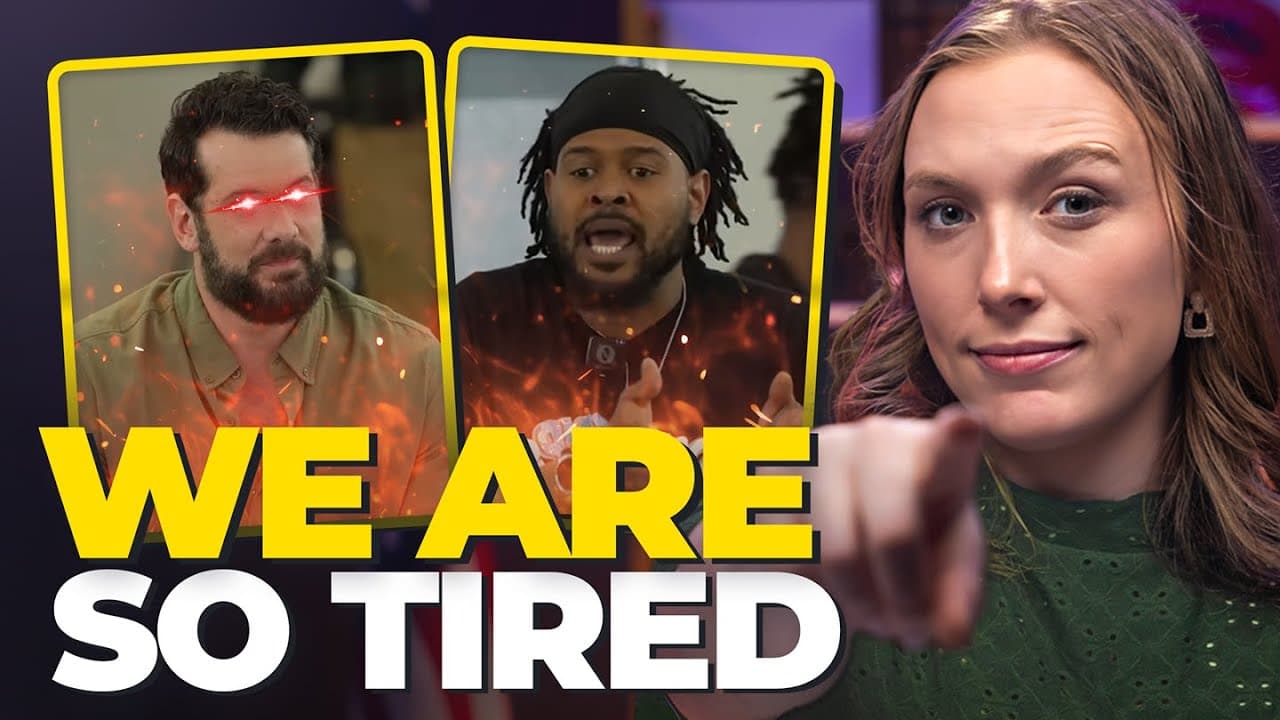
Exhaustion and skepticism prevail regarding the overrepresentation of Black people in violent crime statistics. There is a belief that narratives are manipulated to portray Black communities negatively, despite claims of their non-violent nature.
A debate exists on whether violence has genetic or cultural roots in certain communities. Personal observations, such as brothers growing up in different families yet exhibiting similar traits, suggest a possible genetic component, although this view often faces strong opposition.
A growing racial divide in America is perceived, exacerbated by legacy media outlets like CNN and MSNBC. This media influence contributes to a sense of fatigue and gaslighting among those witnessing the escalating tensions.
Individuals encounter racial discrimination in professional settings, exemplified by a Black colleague refusing communication due to guests on a show. This highlights how broader racial issues manifest in daily interactions.
Alarming statistics circulate regarding the Black community, such as a high percentage of Black men arrested by age 25 and Black women with herpes. These figures are considered shocking and indicative of deeper societal problems.
Young white Americans feel vilified and pushed to foot the bill for historical 'original sins' or crimes they did not commit. This discontent is seen as understandable given the pressure to acknowledge and compensate for past injustices like slavery, despite only a small percentage of white people having owned slaves historically.
The murder of Ireina Zerutka by a Black man with multiple arrests, released partly in the name of racial justice, has spurred significant reaction from white Americans. This incident underscores concerns about the consequences of certain racial justice policies on public safety.
Black people tend to check each other for subtle disrespect, but these checks often escalate to violence. White culture, conversely, is described as less prone to violent escalation for minor offenses and generally not bringing weapons to conflict situations, as illustrated by a track meet stabbing incident.
The speaker faced government surveillance, demonetization, and account deletions on major social media platforms (YouTube, Instagram, TikTok) for discussing men's issues. This suppression forced the shutdown of a show and the deletion of years of work.
The 'female economy,' where women make 80% of consumer buying decisions, influences online platforms like YouTube to cater to a majority-female audience for profit. This dynamic limits free speech, especially for conservative creators, as platforms prioritize funding over the free flow of ideas.
In response to censorship, a new app, the Audacity Network, was created to provide a space for true free speech. This platform aims to host old content, shape future documentaries, and build a community that resists silencing.
Social and economic dynamics in the country are perceived as heading in the wrong direction, sliding towards an autocratic regime. This trajectory is linked to a one-dimensional, isolationist approach lacking an understanding of geography and history.
The rest of the world is increasingly infuriated with America's current shape, and the US is losing opportunities to China. China is fostering relationships globally, including with Canada, Mexico, and Latin American countries, and strategically building infrastructure (e.g., a new canal bypassing Panama) to circumvent American influence.
Freedom is considered a privilege, not a right, and comes with significant responsibilities. Unlike countries like Canada, where offensive speech can lead to fines or jail, the US offers greater freedom, but individuals are not exempt from the consequences of their words and actions.
Different racial and gender groups possess varying 'offended meters,' leading to disparate reactions and consequences for perceived slights. Some communities are described as having a higher threshold for offense, while others react more intensely, potentially escalating to violence, such as a Black woman reportedly shot for a perceived lack of gratitude.
Barbershops serve as unique spaces for Black and white people to have candid conversations about complex issues, allowing for the exchange of differing perspectives and fostering understanding beyond typical echo chambers.
When engaging in difficult conversations, individuals' presentation and demeanor are crucial. An 'air of superiority' or certain body language can impede productive dialogue, making it important to approach discussions with humility and respect, rather than asserting dominance.
Freedom is not a right; it is a privilege until you wake up the next morning and find out you don't have it anymore.
| Key Insight | Details | Implication |
|---|---|---|
| Racial Crime Statistics | Black individuals are disproportionately represented in violent crime statistics, leading to skepticism about underlying causes and the portrayal of Black communities. | This fuels debates about genetic vs. cultural factors in violence and contributes to racial division, with some viewing the statistics as manipulated. |
| Censorship and Free Speech Suppression | Individuals face severe censorship, demonetization, and account deletions on mainstream platforms for expressing certain views, particularly on men's issues. | This suppression necessitates the creation of alternative platforms, like the Audacity Network, to ensure free speech, challenging the influence of the 'female economy' on content moderation. |
| America's Global Decline and Geopolitical Shifts | The U.S. is perceived as an isolationist power sliding towards autocracy, with decreasing global influence. | China is strategically expanding its global reach, fostering alliances, and bypassing American infrastructure (e.g., new canals), leading to international dissatisfaction with America's standing. |
| Cultural Differences in 'Offended Meters' | Different racial and gender groups exhibit significantly varied thresholds for offense. | These differing 'offended meters' lead to disproportionate reactions and consequences for perceived slights, highlighting a communication gap and potential for conflict escalation based on cultural norms. |
| Freedom as a Privilege with Responsibilities | Freedom of speech is considered a privilege in the U.S., distinct from countries like Canada where expression is more restricted. | This privilege comes with responsibilities, as individuals are not immune to the consequences of their words, emphasizing the balance between free expression and accountability. |