
16 Oct 2025
A heated debate examines whether participation in OnlyFans can genuinely align with feminist principles. Two women passionately argue opposing views on female body commodification, financial autonomy, and societal perceptions of sexuality.

The discussion begins with critical observations regarding the debaters' perceived intelligence and racial privilege, immediately setting a confrontational tone. The debate itself is characterized as an aggressive exchange between two individuals.
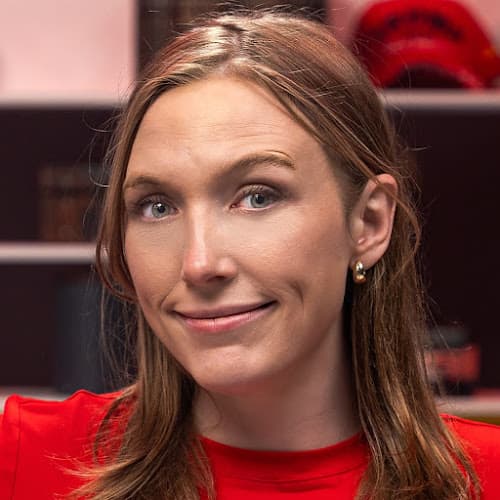
The central question explored is whether an OnlyFans model can simultaneously be a feminist, a topic openly debated by Farah Khaledi and Esther Kraku. The host introduces the topic, referencing their book 'Woke is Dead' which discusses gender and feminism.
Esther Kraku argues that there is nothing feminist about commodifying the female body through platforms like OnlyFans. She asserts that it involves working within a patriarchal economy and offers no genuine empowerment, rather just temporary autonomy, and potentially limits future opportunities. She also provocatively states that a husband is statistically the man most likely to harm a woman, in response to questions about nudity for a husband versus public men.
Farah Khaledi contends that OnlyFans can be feminist, allowing women to cut out the middleman and achieve financial independence. She identifies as a 'digital prostitute' but also a virgin, challenging traditional notions of purity culture and asserting a feminist path to abstinence that avoids societal pressures or sexual regret, citing high rates of regret among women regarding sexual experiences. She also offers 'girlfriend experience' content.
A concern is raised about OnlyFans becoming a genuine career path for young girls, who might believe taking off their clothes online is all that is required for success. A British philosopher's quote is used to suggest that engaging in explicit content online can hinder professional respect.
The narrator interjects with sexist comments, attributing men's 'snapping' to women's 'nagging tone' and 'insufferable' nature. The narrator then promotes their new app, 'Audacity Network,' framed as a haven for free speech against censorship experienced on platforms like YouTube, which are allegedly controlled by a 'female economy' where women influence funding decisions, silencing conservative creators. The narrator also questions statistics about domestic abuse, claiming women exaggerate claims of abuse.
The debate touches on the definition of empowerment, with Esther defining it as exercising autonomy responsibly and making choices that do not limit future opportunities. Farah, however, suggests that in the 'female economy,' sexuality can expand opportunities, citing examples like Kim Kardashian. The concept of 'choice feminism' is discussed, with a participant stating disagreement with it, implying that simply saying 'my body, my choice' is insufficient for moral justification.
You can't spread your bum hole on a Saturday and then expect to be treated as a professional on a Monday.
| Aspect | Farah Khaledi's View | Esther Kraku's View | Narrator's Commentary |
|---|---|---|---|
| Stance on OnlyFans & Feminism | Can be feminist; enables financial independence and freedom from men, challenges purity culture through 'feminist virginity', and offers autonomy. | Not feminist; commodifies the female body, operates within a patriarchal economy, offers only temporary autonomy, and is degrading rather than empowering. | Initial skepticism about both debaters' intelligence. Later, sides with Farah, suggesting her approach is 'smarter' for gaining wealth and status, while dismissing Esther's 'purity' claims as hypocritical. |
| Definition of Empowerment | Includes financial autonomy, the ability to define one's sexuality (e.g., virginity outside purity culture), and achieving a 'high status' by being featured on major platforms. | Comprises exercising autonomy responsibly, making choices, living with consequences, and making choices that do not limit future opportunities. | Suggests women's sexuality, when monetized effectively, can expand future opportunities, rather than limiting them, exemplified by figures like Kim Kardashian. |
| Critique of Societal Norms | Challenges the monopoly of religious conservatism on abstinence, advocating for secular women to embrace chastity without toxic purity culture. Questions why public nudity is degrading but nudity for a husband is not. | Emphasizes the danger husbands pose to women (beat, rape, murder) when discussing differences between private and public nudity. | Challenges domestic abuse statistics as exaggerated, criticizes the 'female economy' for controlling funding and censoring free speech, especially for conservative creators. |