

21 Oct 2025
The iPhone 17 Pro Max and Pro series are heralded as the best iPhones in history, showcasing significant advancements across design, display, battery, camera, and processing. Despite its impressive capabilities, it offers limited compelling reasons for an upgrade from recent predecessors like the iPhone 15 or 16 series.
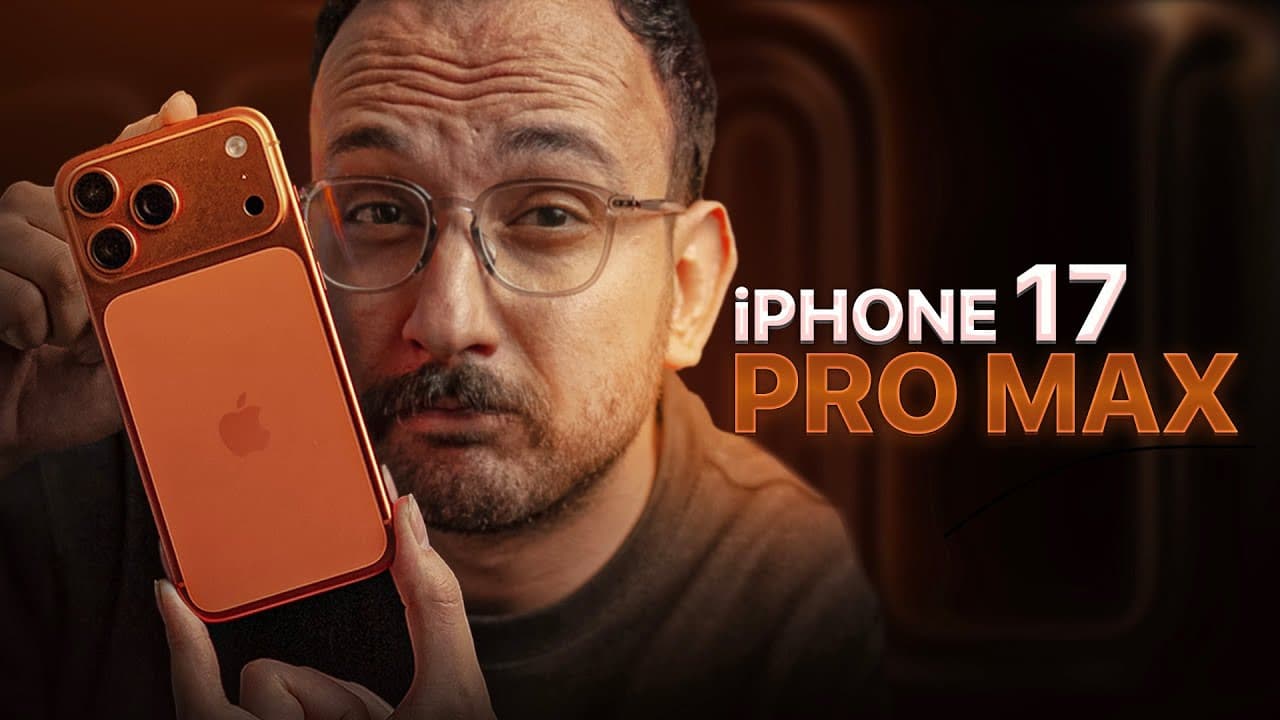
The iPhone 17 Pro Max features a greatly changed design language and material, with a body entirely made of metal, providing a graceful and elegant feel reminiscent of older iPhones. The smooth aluminum edges are more comfortable to hold than previous models, especially in the smaller Pro version.
A notable design issue is the significant color difference between the glass back and aluminum frame, particularly visible on the orange model. The device is highly susceptible to scratches, especially on the camera protrusion's edges, suggesting the necessity of a protective case. The second-generation Ceramic Shield front panel, however, is claimed to be up to three times more scratch-resistant and features an anti-reflective coating to reduce glare, though it does not match the S25 Ultra's performance.
Speaker and microphone placements are reversed compared to earlier models, moving the microphone to the right and speaker to the left, which solves previous issues of accidental microphone obstruction but can now lead to speaker blockage when holding the phone horizontally. An almost useless camera button and a tiny antenna line are present, with the main antenna moved to the frame's edges for improved signal reception. Some models no longer include a physical SIM card tray, relying solely on eSIM, with further details on regional variants provided later.
The Super X Retina AMOLED display is recognized as the best in terms of color accuracy and naturalness, offering increased brightness of 3000 nits (100 nits higher than the previous generation) for better visibility in direct sunlight. An anti-reflective coating further aids visibility in bright environments, and a reduced PWM rate helps alleviate eye strain. It supports HDR10+ and Dolby Vision, with a dynamic 1-120 Hz refresh rate for a fluid experience.
The iPhone 17 Pro Max's display bezels have increased compared to the iPhone 16 Pro Max, a reversal of the industry trend of reducing bezels. The Pro Max screen is 0.2 inches larger than the 16 Pro Max, contributing to a physically larger device overall, while the Pro model's screen size remains consistent with earlier Pro versions.
The iPhone 17 Pro Max features a 5,000 mAh battery, a first for Apple, specifically in models without a physical SIM card slot. Models with a physical SIM tray have a slightly lower battery capacity. Battery performance is strong, with approximately 8% charge reduction for an hour of heavy use on the Pro Max and 10% on the Pro. Benchmark tests indicate a 10% battery drain after 20 minutes of heavy graphics tasks, demonstrating improved battery optimization and competitive standing among flagships.
The iPhone 17 Pro Max supports 40W fast charging, allowing a 50% charge in 20 minutes with a Power Delivery charger, and a full charge in about 1 hour and 4.5 minutes, making it the fastest charging iPhone to date. It also supports 25W wireless charging, offering optimized speed. These charging capabilities are considered a significant upgrade for Apple, although not unprecedented in the wider smartphone market.
The iPhone 17 Pro and Pro Max share an identical camera system, with all three lenses now featuring 48 megapixels, eliminating quality loss during sensor transitions from ultra-wide to telephoto. The facial recognition sensor is completely new and has no competitors, showcasing Apple's continued leadership in biometric security.
The ultrawide sensor is cleaner and offers slightly better quality due to enhanced processing. The 48-megapixel main sensor provides sharper photos than the previous generation, boasting an incredibly good dynamic range and delivering distinct 'iPhone photos' with high clarity.
The telephoto sensor is now 48 megapixels, offering 4x optical zoom, which is a regression from the 5x optical zoom provided by the 12-megapixel sensor on the iPhone 16 Pro Max. Apple compensates by using a crop from the 48-megapixel sensor to deliver 8x optical quality through advanced processing, effectively providing 8x zoom with high fidelity. The system supports a wide range of focal lengths from 13mm to 200mm, offering extensive creative control and consistent image quality across all three sensors, though digital zoom up to 40x is not recommended due to quality degradation.
The iPhone 17 Pro Max excels in video recording, maintaining Apple's leadership with exceptional stabilization, dynamic range, and white balance across all three sensors, resulting in clear, sharp, and clean videos. A new 'Video Processor' feature allows professionals to record video at 6GB per minute for advanced color and light correction in post-production, suitable for users with 1TB or 2TB storage models.
Portrait photography is significantly improved, delivering better subject separation and more attractive background effects, with enhanced color and texture across different focal lengths. Low-light photography benefits from reduced noise, producing cleaner images. However, light reflections remain a persistent issue in low-light video recording, where point light sources create noticeable flares.
The 18-megapixel selfie sensor, consistent across the iPhone 17 Pro and Pro Max, features a unique square sensor design that allows for flexible framing, offering better detail and wider group selfies. The 'Centring' feature, previously seen on iPads, is now available on iPhones, automatically keeping the subject in the middle of the frame.
The A19 Pro processor is hailed as one of the best in smartphone history, delivering exceptional performance in gaming with minimal frame rate instability, low heat, and high stability under stress tests. For the first time, Apple has integrated a vapor chamber cooling system alongside an aluminum construction to efficiently dissipate heat, preventing the device temperature from exceeding 40 degrees Celsius even during demanding tasks.
Despite the powerful A19 Pro processor, the iPhone 17 Pro series launched with iOS 26, which exhibited minor software bugs such as battery icon glitches, text frame turning white, and subtle logo shadow issues. A significant market concern arose from Apple's omission of any major AI announcements, leading to a temporary drop in stock value, as AI capabilities are promised for future updates.
The iPhone 17 Pro Max features Apple's typically high-quality stereo speakers, providing attractive sound quality and resolution, though the overall loudness is perceived to be slightly lower than previous generations.
eSIM technology integrates the SIM card directly into the phone, requiring operators to provide activation codes or QR codes for setup. While this offers convenience, the timeline for widespread eSIM adoption and compatibility (e.g., converting old physical SIMs to eSIMs) remains uncertain. Regional variations exist, with some 'part numbers' offering only eSIM, others a single physical SIM, and certain Chinese models supporting two physical SIMs. The 'part number' that includes both a physical SIM and an eSIM is recommended for maximum flexibility.
The iPhone 17 Pro series, while technically superior, is not recommended as an upgrade from the iPhone 15 or 16 due to incremental rather than revolutionary improvements. It is considered a worthwhile upgrade for users coming from an iPhone 14 or earlier models. Pricing for the 256GB Pro Max version is approximately 190-195 toman, while the 256GB Pro model costs around 127,404 toman (note: currency conversion unclear from original text, likely a localized price reference). Purchase incentives from Digikala include trade-in plans, discounts, lotteries for accessories, and insurance options.
The iPhone 17 Pro Max is considered one of the best iPhones in history, yet it offers insufficient novel features to justify an upgrade from the iPhone 16.
| Feature | Insight/Detail |
|---|---|
| Design Material | Full metal body (frame and chassis) with smooth aluminum edges, offering an elegant feel. Prone to scratches, especially on camera protrusion. |
| Display Quality | Super X Retina AMOLED, 3000 nits brightness, anti-reflective coating, low PWM rate. Best-in-class color accuracy and naturalness. Bezels are larger than 16 Pro Max. |
| Battery Performance | 5000 mAh capacity (Pro Max, eSIM models), strong performance, significant improvement over previous generations. 40W wired charging (50% in 20 min), 25W wireless. |
| Camera System | Triple 48MP lenses (wide, ultrawide, telephoto), consistent quality across sensors. 4x optical zoom (telephoto) with 8x optical quality via processing. Excellent video, improved portraits, better low-light photos. Light reflections persist in low-light video. |
| Processor & Cooling | A19 Pro is one of the best smartphone processors. First-ever vapor chamber cooling system and aluminum construction ensures exceptional stability and low heat during heavy use/gaming. |
| Software & AI | iOS 26 launched with minor bugs. No AI features at launch; Apple's lack of AI announcement negatively impacted stock. Strong Apple ecosystem noted as a key differentiator. |
| Upgrade Value | Not recommended for users upgrading from iPhone 15 or 16 due to incremental changes. Worthwhile upgrade for users with iPhone 14 or older models. |
| SIM Card Options | eSIM-only models (more battery), physical SIM models (less battery). Part number with both physical SIM + eSIM recommended for flexibility, awaiting operator support for eSIM. |