
21 Oct 2025
The iPhone Air presents a beautiful, exceptionally thin design, yet it comes with notable problems, particularly concerning its battery life and thermal management. Despite these issues, its existence hints at Apple's future strategies in smartphone development, potentially influencing Pro models or paving the way for foldable technology.
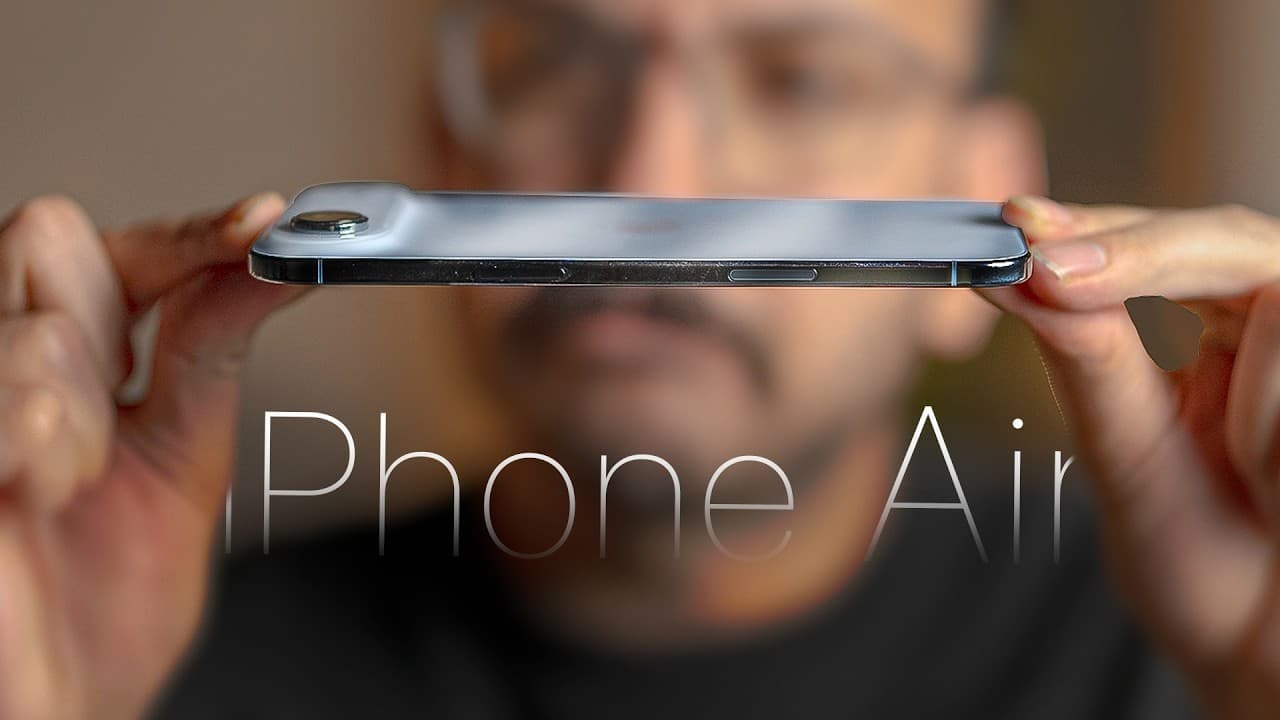
The iPhone Air features an unparalleled 5.5-millimeter thickness and a lightweight 165-gram build, providing an amazing tactile sensation. Its mirror-finish titanium frame, unlike the iPhone Pro's aluminum, easily collects fingerprints, while an all-glass back with ceramic shield prevents scratches. A prominent camera plateau and lens protrusion cause the phone to wobble on flat surfaces, a design choice enabling greater internal component and battery space. Light colors are recommended for their aesthetic appeal and less visible fingerprints.
Despite its extreme thinness, the iPhone Air exhibits surprising resilience in stress tests, demonstrating significant resistance for its slim profile.
The 1.5-inch display offers exceptional color accuracy, quality, and naturalness, with 3000 nits brightness and a dynamic 1-120 Hz refresh rate. Its high brightness effectively prevents 'suffocation,' a common screen dimming effect in direct sunlight.
The battery represents the iPhone Air's most significant drawback, with a capacity providing approximately 4 to 4.5 hours of screen time, substantially less than iPhone 17 Pro models. Charging is limited to 20 watts wired and 15 watts with MagSafe, requiring about 1.5 to 1.7 hours for a full charge, with expected greater degradation over time.
Apple's signature 3D facial recognition provides secure and unmatched authentication.
A single 48-megapixel sensor, shared with standard iPhone 17 models, delivers high-quality photos with excellent dynamic range, detail, sharpness, and natural colors in good lighting. Low-light performance is not on par with multi-sensor iPhones. It includes 2x digital zoom and exceptional video stabilization, alongside an 18-megapixel selfie camera. This single-lens setup adequately serves users not requiring optical zoom or extensive photography features.
The A19 Pro processor, equipped with one less GPU core than Pro models, struggles with heat dissipation due to the lack of a cooling system and an aluminum body. This results in significant heating during heavy use, leading to reduced stability and minor frame drops in games compared to the Pro models.
Operating on iOS 26, the iPhone Air benefits from Apple's integrated ecosystem, offering a clean, organized, and smooth user experience. Current AI capabilities are noted as basic.
The iPhone Air's thin design necessitated the removal of the bottom speaker, resulting in poor audio performance. Sound exclusively from the top speaker creates a mono experience, negatively impacting media consumption.
As an eSIM-only device, the iPhone Air lacks a physical SIM card tray, posing an inconvenience for users accustomed to physical SIMs. Its compatibility and regulatory status with local Iranian operators remain uncertain, impacting market appeal.
The iPhone Air serves multiple strategic goals for Apple: justifying thicker Pro models with larger batteries, preparing the market for future thin silicon-carbon batteries, and potentially acting as a foundational step towards an iPhone Fold model.
The iPhone Air is a niche product, generally not recommended for the majority of users due to compromises in battery and camera compared to the standard iPhone 17, which offers better overall value. It appeals primarily to a small segment of Apple fans who prioritize extreme thinness and lightweight design for light usage. High prices and uncertain SIM registration in Iran further diminish its broad appeal.
This thin iPhone Air could be a precursor to the iPhone Fold, potentially allowing it to achieve a normal phone thickness when folded.
| Feature | iPhone Air Insight | Impact/Comparison |
|---|---|---|
| Thickness | Extremely thin at 5.5 mm. | Contributes to unparalleled design feel, but impacts internal components and cooling. |
| Battery Life | Approximately 4-4.5 hours of screen time. | Significantly less than iPhone 17 Pro and Pro Max models (2-4 hours less). |
| Processor Cooling | Lacks a dedicated cooling system; body is titanium. | Heats up significantly under load, leading to stability/frame rate drops. |
| Speaker System | Single top speaker only. | Poor stereo audio performance due to absence of bottom speaker. |
| SIM Card | eSIM only, no physical SIM tray. | Limits flexibility for users who need physical SIMs (travel, multiple numbers). |
| Strategic Purpose | May pave the way for future iPhone Fold or thinner battery technology. | Allows Apple to justify thicker Pro models and explore new form factors. |