

20 Oct 2025
The Redmi Note 14 Pro G offers an almost unrivaled value in its price range, featuring a sleek design, vibrant display, and a robust 5500 mAh battery with fast charging. However, its camera system presents notable weaknesses in dynamic range and video recording capabilities, while the user interface experiences occasional lags despite stable gaming performance.
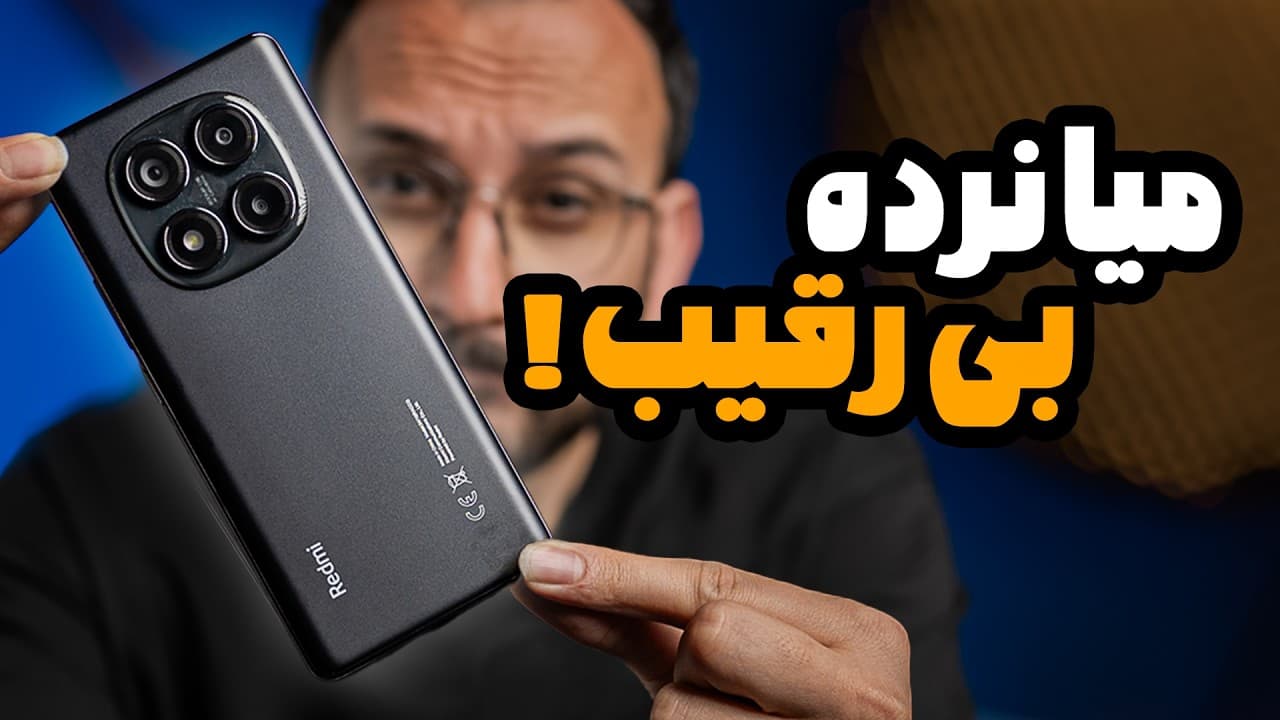
The Redmi Note 14 Pro G is priced at 19.50 (currency not specified, likely millions) for the 256GB RAM 8GB version on May 18, 2021, and is almost unrivaled in its price range.
The phone's design carries the originality of the Redmi Note 14 family, featuring a plastic back that shows fingerprint marks under light, an aluminum front with Gorilla Glass Victus, and a camera module resembling a gas stove that respects balance and symmetry.
The phone includes a Type-C port, SIM card slot, microphone, and speaker at the bottom, power and volume buttons on the right edge, and a headphone jack at the top, while the left edge is bare.
The front panel boasts an 88.4% screen-to-body ratio due to slim bezels, a punch-hole selfie camera, and IP64 certification for dust and water resistance; its curved design enhances grip but increases the risk and cost of screen breakage.
The 6.67-inch display offers 1080 nits of brightness, 1 billion colors, and a clean, colorful, and vibrant image with deep blacks, though it lacks HDR+ and Always On Display, and exhibits a shadow sphere when viewed from the side.
The 120 Hz display offers an acceptable score, with the ability to switch between 60 Hz and 120 Hz modes.
A 5500 mAh battery is a strong point, providing a full day's charge from just one hour of gaming (9-10% drain) and charging from zero to 100 percent in 1 hour to 1 hour 25 minutes with the included 45-watt adapter.
The under-display fingerprint sensor offers acceptable speed without being exceptionally fast.
The 200-megapixel main lens sensor captures clean and clear photos, but shows weaker dynamic range, color exaggeration, and occasional light metering issues compared to Samsung competitors; 200MP mode offers better detail for heavy cropping, and digital zoom is acceptable up to 5x.
Portrait photography is decent but not outstanding, while night mode photos are surprisingly good, offering excellent detail without noise, provided there is a light source.
The 8-megapixel ultra-wide sensor produces photos with noise and low contrast, and the 2-megapixel macro sensor is not highly regarded.
Video recording is a significant weakness, lacking 4K capability (limited to 1080p at 30/60fps) and exhibiting light metering problems, making it unsuitable for content production.
Despite using the same sensors as the G version, the Redmi Note 14 Pro G lacks the superior 4K video recording and much better video and photo processing found in its counterpart, highlighting the processor's impact on image processing.
The 32-megapixel selfie sensor produces photos that appear good from a distance but lack detail upon zooming in, showing poor dynamic range and noise in dark areas.
Equipped with a Helio G10 processor, the phone delivers stable, non-overheating gaming performance on medium graphics for extended periods (40-50 minutes).
The user interface exhibits noticeable lags and bugs, with slow animations and icon loading, indicating a lack of synchronization between Xiaomi's software and the Helio G10 processor, though software updates might offer a fix.
The phone is expected to receive Android 14 updates, with a best-case scenario of three years of updates, but Xiaomi's update regularity is inconsistent; the UI is full of heavy animations and lacks sophisticated AI capabilities beyond standard Google features.
The phone features a 3.5mm headphone jack, which is beneficial for gamers, and boasts a good stereo speaker setup with excellent bass, making it competitive in its range.
The Redmi Note 14 Pro G offers an incredibly neat design, excellent screen quality, and great battery life, but has an ordinary camera (weak video) and a stable processor with UI desynchronization; it is a better choice than the Galaxy A26 for design, display, and battery, but the A26 might be superior in processor, updates, and camera.
Samsung's 20-series (A26, A25, A24) often uses last year's processors and is less popular in the Iranian market, leading to fewer services and repair parts, making the A35 a potentially better option if its price aligns.
The Redmi Note 14 Pro G stands out in its price range, offering a compelling package of elegant design, a high-quality display, and an exceptional battery, making it a strong choice for users prioritizing these features despite some camera and UI drawbacks.
| Feature | Assessment |
|---|---|
| Price Range Competitiveness | Almost unrivaled, offering strong value. |
| Design & Ergonomics | Neat, cute, and comfortable curved design, but increased risk of screen breakage. |
| Display Quality | Excellent 6.67-inch, 1080-nit, 120Hz panel with vibrant colors, despite a side-view shadow. |
| Battery Life & Charging | Outstanding 5500 mAh battery providing full-day usage with 45W fast charging and included adapter. |
| Main Camera Performance | Clean 200MP photos and good night mode, but suffers from weaker dynamic range, color exaggeration, and light metering issues. |
| Video Recording | Significant weakness; no 4K, poor light metering, not suitable for content creation. |
| Processor (Helio G10) | Stable gaming performance without overheating, but causes noticeable user interface lags and bugs. |
| Software Updates | Inconsistent update regularity from Xiaomi, with a best-case 3-year update policy. |
| Audio Quality | Excellent stereo speakers with good bass and a convenient 3.5mm headphone jack. |
| Market Comparison | Stronger than Galaxy A26 in design, display, and battery; potentially inferior in processor and camera to A26/A35. |