
7 Oct 2025
This 2025 IT career roadmap outlines a clear path to rapidly secure an IT job and progress towards a six-figure dream job without requiring a college degree. It emphasizes foundational skills, practical experience, and networking, with a special focus on the exciting field of ethical hacking and cybersecurity.
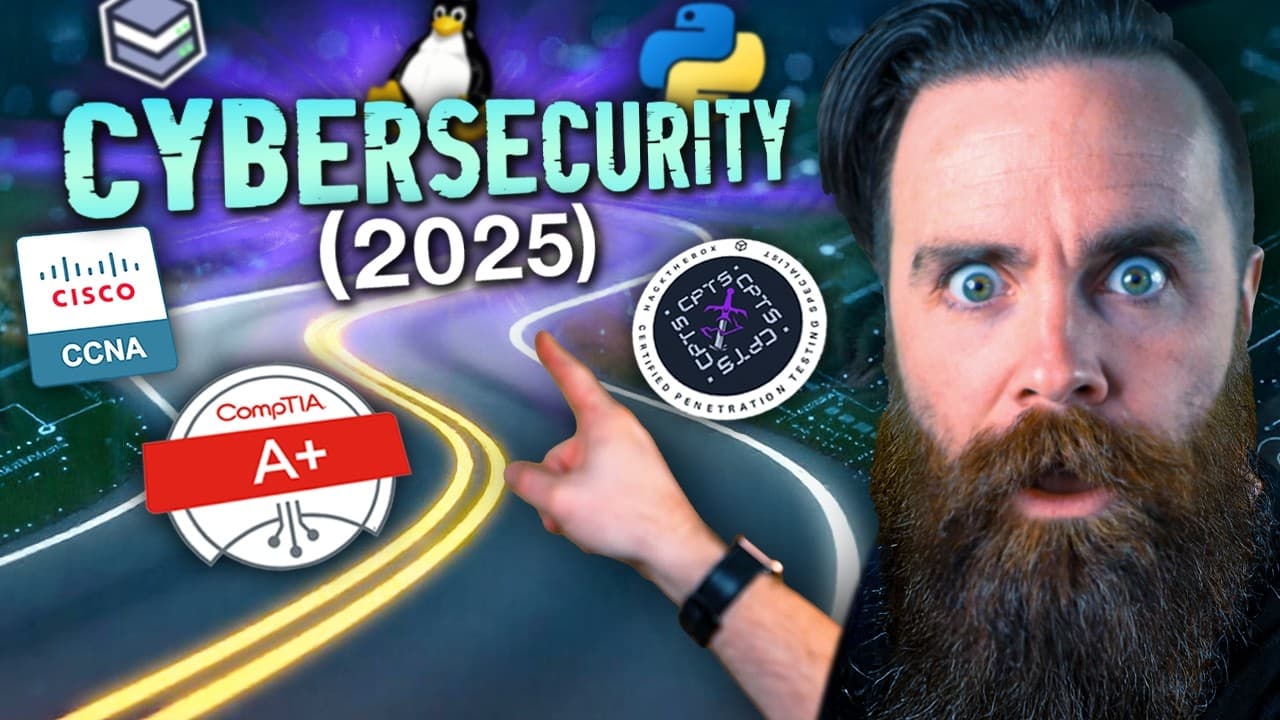
The 2025 IT career roadmap aims to help individuals secure an IT job rapidly and advance to a six-figure dream job, stressing that a college degree is not a prerequisite. The initial three phases build foundational IT skills essential for any path, after which various specializations become accessible, with a particular focus on cybersecurity and ethical hacking.
Phase zero encourages immediate applications for entry-level IT help desk or technical support roles, even without prior IT skills, emphasizing that excellent customer service is often the primary requirement. Resumes should be polished to reflect IT-focused aspirations, leveraging existing experience, and networking with professionals and mentors is crucial as relationships often lead to job opportunities. This approach prioritizes gaining experience, which is considered more valuable than academic study.
Phase one focuses on developing core IT skills, with the CompTIA A+ certification serving as a comprehensive introduction to various IT domains and a credential to help bypass HR filters for initial job applications. Concurrently, individuals should dedicate time weekly to learning Linux and Python basics and build a home lab to implement theoretical knowledge practically, creating resume-building projects like installing virtual machines or setting up a DNS server. This foundational phase is estimated to take two to three months of consistent study.
Phase two centers on acquiring the CompTIA Security+ certification, which provides a broad understanding of security concepts and is highly valued by employers, including government roles due to its compliance with DOD 8570 directive. Continuous engagement with Linux, through security-focused challenges like 'Over the Wire Bandit,' and Python, by building practical projects such as a simple network scanner, is encouraged. Home lab activities should reinforce security concepts, and the ongoing practice of applying for jobs and updating resumes is essential. This phase is estimated to take two to three months.
Phase three emphasizes mastering networking, offering a choice between the more challenging and practical Cisco CCNA, which focuses on Cisco products, or the vendor-neutral CompTIA Network+. Linux and Python studies should now be networking-focused, particularly in network automation, and practical application in a home lab is critical, such as replacing a home router with PF sense or building a custom network. This phase is estimated to take two to four months, with the CCNA typically requiring more time.
Phase 3.5 is a dedicated period for job acquisition if employment has not yet been secured, urging full-time effort into the job search. It involves continuous skill refinement, expanding the home lab with new projects, regular resume updates, persistent job applications, diligent interview practice, and ongoing networking. At this point, with foundational certifications and practical experience, candidates are competitive for a wide range of entry-level and intermediate IT positions.
Following the foundational phases, the ethical hacking (offensive security or red teaming) path is highlighted as an exciting specialization, requiring a shift to a 'break it' mindset. Recommended certifications include entry-level options like EJPT or PenTest+, intermediate choices such as the Certified Penetration Testing Specialist (CPTS) from Hack the Box, and the industry gold standard, OSCP. This path heavily relies on Linux and Python proficiency, and practice through Capture the Flag (CTF) events, like PICO CTF, is crucial for developing hacking skills.
The roadmap encourages individuals to tailor their journey, allowing experienced individuals to bypass certain phases if their foundational knowledge is already strong. Certifications primarily serve to validate knowledge, but gaining a job can significantly alter the roadmap, potentially allowing individuals to skip entry-level roles and learn on the job. Adaptability to new opportunities and continuous learning are paramount over strict adherence to the sequence.
While a college degree is not deemed essential for this roadmap, its value in opening doors is acknowledged, despite potential costs and time commitments. For those pursuing an IT degree, the recommendation is to select programs that integrate industry certifications, such as Western Governor's University (WGU), ensuring graduates possess both academic qualifications and practical, employer-recognized credentials.
Despite the rapidly evolving technological landscape and uncertainties surrounding AI's impact on employment, the foundational IT skills covered in this roadmap are considered crucial and likely to remain in high demand. The content invites suggestions for future roadmaps covering other IT specializations, such as cloud or network engineering.
The whole point of all of this is to get you a job.
| Phase | Primary Focus | Key Certifications | Associated Skills | Practical Application | Estimated Duration |
|---|---|---|---|---|---|
| Phase 0: Get Started Fast | Immediate Job Application | None (Focus on existing experience) | Excellent customer service, networking | Tailor resume to IT, apply for help desk/tech support roles | Ongoing until job secured |
| Phase 1: Foundations | Core IT Skills | CompTIA A+ | Linux basics, Python basics | Build home lab (VMs, DNS server), apply for jobs | 2-3 months |
| Phase 2: Security Dip | Security Fundamentals | CompTIA Security+ | Security-focused Linux (OverTheWire), Python projects (network scanner) | Home lab automation, continuous job application | 2-3 months |
| Phase 3: Networking Bread & Butter | In-depth Networking | Cisco CCNA (preferred) or CompTIA Network+ | Networking-focused Python/Linux (automation) | Replace home router (PFsense), build home network | 2-4 months (CCNA typically longer) |
| Phase 3.5: Get That Job | Dedicated Job Search | All previous certs | Skill refinement, interview practice, networking | Full-time job search, expand home lab projects | As needed |
| Post-Foundations: Ethical Hacking | Offensive Security / Red Teaming | EJPT/PenTest+ (junior), CPTS (intermediate), OSCP (gold standard) | Advanced Linux, Python for hacking, CTF practice | Practice CTFs (PICO CTF), apply for pen tester jobs | Ongoing journey |
| General Principles / Shortcuts | Adaptability & Practicality | Optional if knowledge is proven | On-the-job learning, seizing opportunities | Tailor roadmap to existing knowledge, accept jobs even if 'unready' | N/A |
| College Degrees | Academic Qualification (Optional) | Integrated into curriculum (e.g., WGU) | Theoretical foundation, structured learning | Choose programs that include certifications | Varies (typically 2-4 years) |