
7 Oct 2025
Allowance can be transformed from a mundane task into an exciting learning opportunity by introducing custom cryptocurrency. This video demonstrates the creation of a personalized Solana token and its application for automating chore allowances, fostering financial education and playful competition among children.
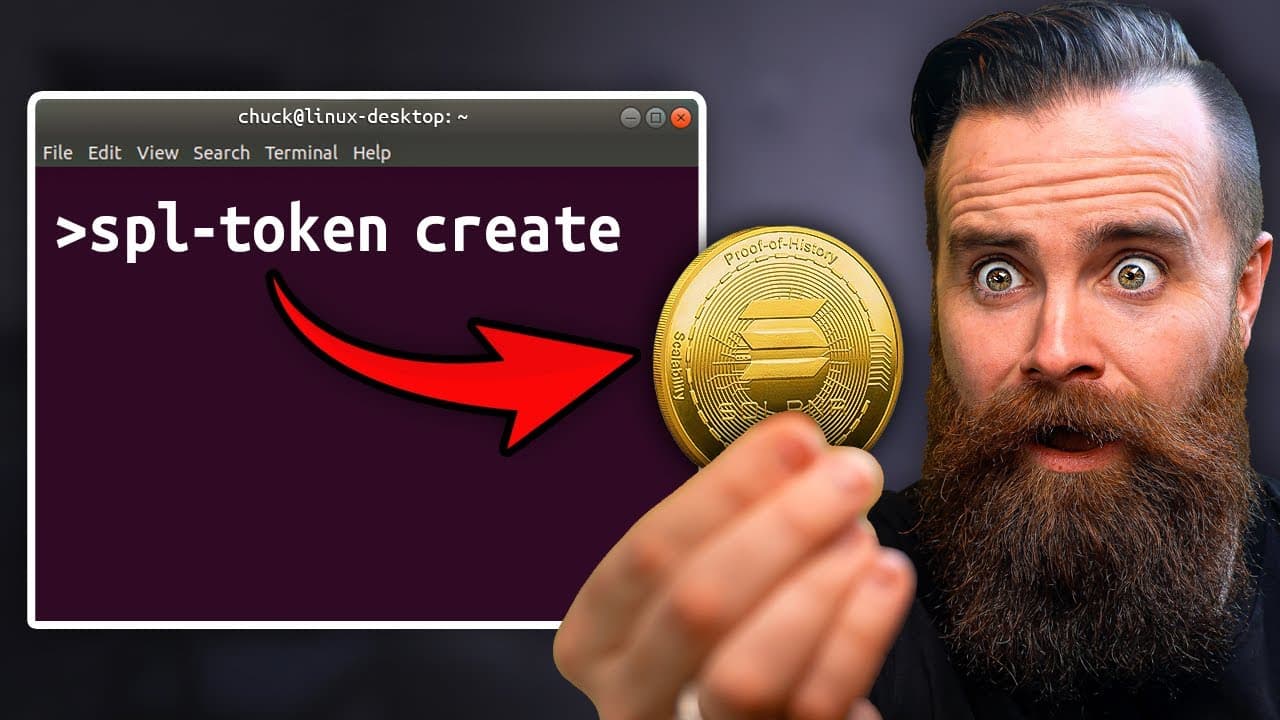
The video introduces a novel approach to allowance by replacing traditional money with custom cryptocurrency, aiming to teach children financial literacy and foster playful competition.
Blockchain platforms like Bitcoin, Ethereum, and Solana are distinct from their native cryptocurrencies (BTC, ETH, SOL), with Solana highlighted for its efficiency and low transaction costs.
Token creation can be performed on Solana's DevNet for free experimentation or on MainNet for real-world value, with the latter requiring actual SOL.
The setup involves installing Docker and using WSL for Windows to create a Solana Docker container, enabling command-line interface (CLI) operations for token development.
Creating Solana accounts includes a 'dad' account as the token owner and a 'mint' account acting as the token's factory, each serving specific purposes.
The token minting process uses the `SPL Token create token` command, allowing for metadata definition, decimal settings, and linking to the mint address, with the MainNet requiring real SOL.
Custom logos and metadata (name, symbol, description) are uploaded to decentralized storage platforms like Pinata.cloud and then associated with the token on the blockchain.
A token account is established before using `SPL token mint` to generate a specified token supply, with options available to irreversibly disable future minting and freezing capabilities to ensure scarcity and trust.
Tokens are transferred to any Solana wallet address using the `SPL dash token transfer` command, including provisions for funding recipient accounts.
To enable public trading, liquidity is added to decentralized exchanges like Radium.io by pairing the custom token with SOL, though this step is optional and incurs real SOL costs.
Burning Liquidity Pool (LP) tokens permanently locks in liquidity, signaling commitment to the token and enhancing its perceived legitimacy.
An automated allowance system integrates a habit-tracking app (Habita) via webhooks with a Python web app to automatically disburse custom KES tokens to children's wallets upon task completion, incorporating multipliers for consistent habits.
Dashlane, a sponsor of the video, is recommended for securely storing sensitive information, including private keys, which are crucial for wallet security.
The entire project serves as an educational tool for children, allowing them to learn about market dynamics and financial concepts through a friendly competition with their own custom cryptocurrencies.
I'm showing you this, not to say do this exact thing, but to show you that with cryptocurrency and Solana and tokens and stuff, you can have as much fun as you want.
| Aspect | Description | Significance |
|---|---|---|
| Custom Cryptocurrency for Allowance | Replaces traditional money with personalized Solana tokens to incentivize chores and teach financial literacy. | Transforms mundane tasks into engaging learning experiences, fosters understanding of markets and value. |
| Solana DevNet vs. MainNet | DevNet offers a free environment for token experimentation, while MainNet deploys real-value tokens requiring actual SOL. | Provides a risk-free learning ground before committing real resources to a production environment. |
| Command Line Interface (CLI) Use | All token creation and management is performed via terminal commands. | Offers a direct, 'cooler' interaction with blockchain technology and its underlying mechanics. |
| Token Authority Management | Disabling minting and freezing capabilities after initial setup makes the token supply finite and prevents owner interference. | Establishes scarcity and trust, crucial for a token's perceived legitimacy and value. |
| Adding Liquidity for Trading | Pairing the custom token with SOL on a decentralized exchange like Radium.io enables public buying and selling. | Creates a market for the token, allowing its value to be determined by supply and demand. |
| Automated Allowance System | Integrates a habit-tracking app (Habita) with a Python web app to automatically disburse tokens for completed tasks. | Streamlines allowance, reinforces positive habits through instant rewards, and showcases practical blockchain application. |