
29 Sept 2025
This program critically examines pressing issues in Iran, including severe water and energy shortages, government internet policies, and the state of digital infrastructure. It also covers global tech news and political developments, highlighting the stark contrast between official narratives and public experience.

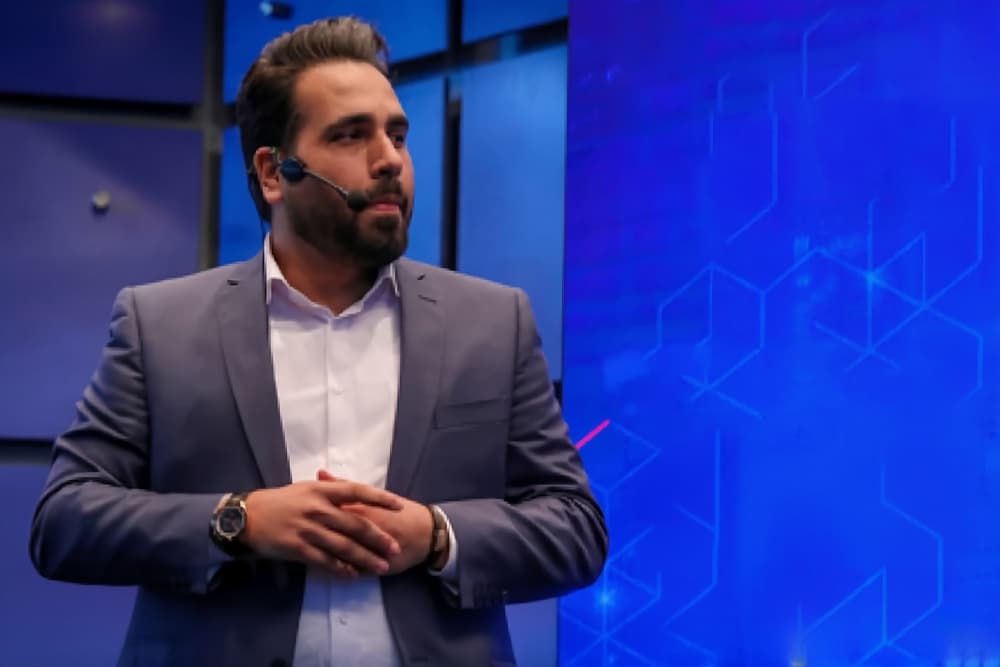
The current episode of 'Tac-Talk' introduces Sina and Sistani as hosts, while marking a temporary farewell to Siamak, who is departing for military service, prompting reflections on a common national experience and humorous anecdotes.
Tehran and Karaj are experiencing persistent water pressure drops and electricity outages, with officials advising residents to install water tanks due to a five-year drought and unprecedented rainfall reduction, leading to historically low water reserves. Citizens frequently encounter simultaneous failures of water, electricity, and internet services.
The effectiveness of the university entrance exam (Konkur) is questioned, with frustrations expressed over students pursuing irrelevant degrees or choosing emigration, indicating systemic issues within the educational and employment sectors.
A government spokesperson suggested 'freer internet' for journalists, but the government's approach to internet access is criticized for categorizing users and restricting access instead of ensuring universal, unrestricted connectivity. This policy is deemed ineffective if journalists receive 'freer internet' but their audience cannot access the published content.
New executive regulations concerning digital business activities have been approved by the Supreme Council of Cyberspace, a body comprising high-ranking officials.
Donald Trump's proposed 30% tariffs on goods from the European Union and Mexico are discussed, with Trump citing Mexico's insufficient cooperation on border security. The European Union is reportedly considering retaliatory measures.
The upcoming iPhone 17 launch highlights the contrast in affordability, where an American minimum wage earner could purchase two iPhones monthly, while Iranians face significant challenges due to economic conditions and import restrictions, including e-SIM compatibility issues.
Intel, formerly a leader in chip manufacturing, has fallen out of the top ten global chipmakers, while its competitor, Nvidia, has seen a substantial increase in market value, signifying a major shift in the tech industry.
The government's frequent practice of disconnecting the internet during crises is criticized as an unjustified and ineffective default response, contrasting with other nations that maintain internet access even during wartime.
Iran's current economic environment lacks a stable digital economy, characterized by frequent disruptions to financial services, gold transactions, and currency exchanges, offering citizens few reliable investment avenues.
A Deputy Minister of Communications' proposal to disable GPS due to US oversight and implement Chinese alternatives (Baidu) is heavily criticized for its technical ignorance, as modern mobile devices already support multiple global navigation satellite systems.
Iran's telecommunication network infrastructure is described as highly vulnerable and outdated, suffering from frequent DDoS attacks (both internal and external), reliance on refurbished imported servers, and widespread security flaws.
The concept of 'indigenous operating systems' is mocked as superficial, often appearing as mere rebranded Linux distributions lacking genuine innovation or functional enhancements.
Iranian youth are highly proficient in circumventing internet filtering, with anecdotal evidence suggesting even elderly individuals are engaged in trading VPN configurations.
The First Vice President emphasizes accelerating service provision through the National Information Network (NIN) to enhance national security, despite public skepticism and ongoing bureaucratic challenges in administrative services.
Public services are severely hampered by extreme bureaucracy, leading citizens through multiple offices and systems that are frequently offline or unresponsive, resulting in significant delays and inefficiencies.
Iran has lodged multiple complaints with the International Telecommunication Union (ITU) regarding Starlink's unauthorized operations within its borders, even as Starlink continues to expand its services.
The Unicode Consortium has released new emojis for version 16.0, while local communication apps like Shad are noted for censoring specific emojis, such as the middle finger, indicating content moderation beyond global standards.
Donald Trump claimed credit for influencing Coca-Cola's decision to switch from high-fructose corn syrup to real cane sugar in its US products, attributing the change to his personal recommendations.
An application named 'Arbe' is recommended for monitoring internet quality, including speed, stability, and ping, across various platforms.
The host addresses listener comments, including criticisms of his 'grumpy old man' persona, explaining his frustration stems from the dire reality of daily life and the lack of positive news. He also clarifies YouTube ad placement policies and the definition of open-source software.
The fact that one can easily connect to the dark web in Iran but struggles with basic internet access truly reflects the paradoxical digital reality.
| Insight | Summary |
|---|---|
| Water Scarcity and Infrastructure Strain | Tehran and Karaj face severe water pressure drops and power outages due to a five-year drought and historically low water reserves, prompting public advisories to install water tanks. |
| Contradictory Internet Policies | The government's stance on internet access is inconsistent, promising 'freer internet' for journalists while implementing categorization and frequent disconnections for the general public, undermining the very purpose of news dissemination. |
| Deteriorating Digital Infrastructure | Iran's telecommunication network is highly vulnerable to DDoS attacks and relies on outdated, refurbished imported servers with significant security flaws, hindering digital economy development. |
| Officials' Technical Misunderstanding | A Deputy Minister's suggestion to replace GPS with less capable Chinese alternatives due to US oversight exposed a fundamental lack of understanding of global navigation satellite systems already present in modern devices. |
| Socio-Economic Challenges and Emigration | The futility of university entrance exams and pervasive administrative bureaucracy drive widespread frustration and emigration, starkly contrasting with the purchasing power and opportunities in developed nations. |