

29 Sept 2025
The iPhone 16 is positioned as a more affordable iPhone option, specifically targeting older Apple users upgrading from iPhone 11/12 models and Android users looking to enter the Apple ecosystem at a $600 price point. It offers powerful hardware and good battery life despite some cost-cutting measures like a recycled design and a 60Hz display.
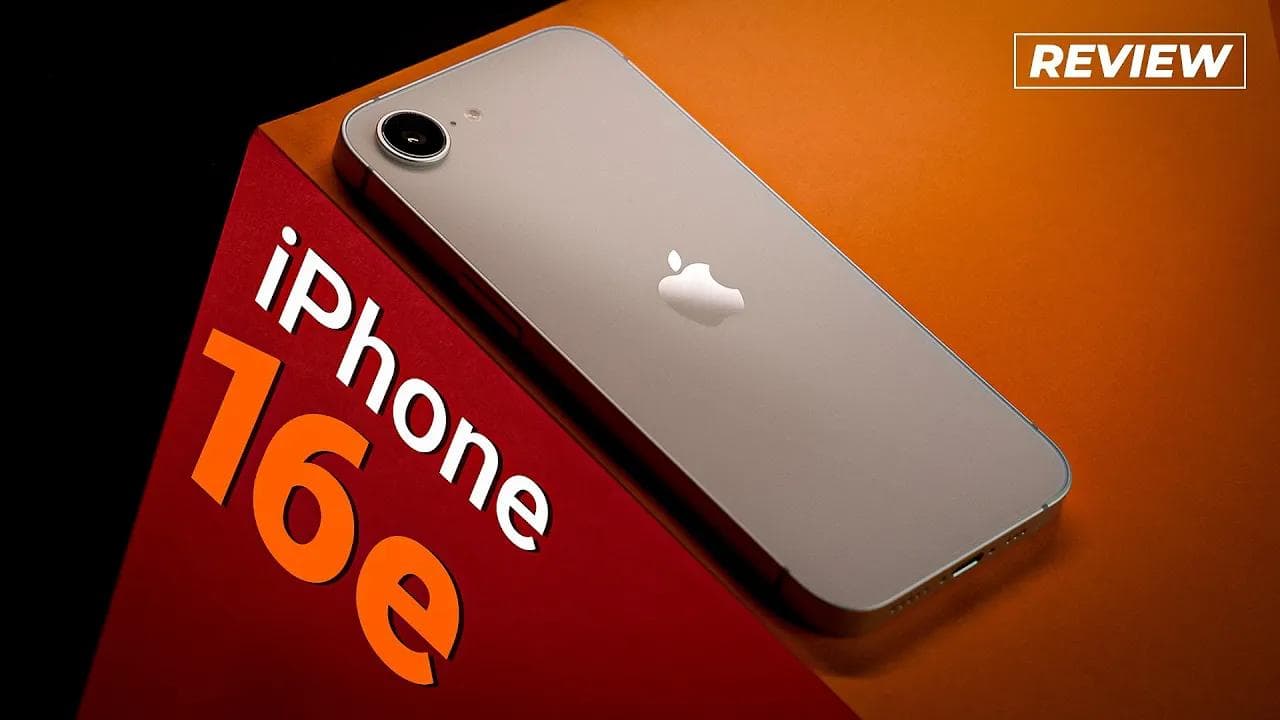
The iPhone 16 serves as a cheaper iPhone option for older Apple users who have not updated their devices in several years and do not wish to spend extensively on newer models. Its $600 price point makes it an appealing entry for Android users transitioning into the Apple ecosystem, although the cost remains relative.
The iPhone 16 features an extremely minimal design, where Apple removed a camera and an inconvenient camera control button to reduce costs. This removed button is replaced by the Action Button, which with the new 18 and 4 update, can control camera functions, visual intelligence (though not functional in Iran), shortcuts, and VPN activation, representing an unintentional improvement. The overall design of the iPhone 16 is identical to the regular iPhone 14, which itself recycles the iPhone 13's design, making it a three-year-old aesthetic.
Cost-cutting measures on the iPhone 16 include the absence of Dynamic Island, a feature intentionally omitted, and a 60 Hz display. Additionally, MagSafe and its wireless charging capabilities are limited to 7W. Apple’s research indicates that users in this price range do not frequently use wireless chargers or MagSafe, justifying these removals.
The iPhone 16 boasts new and powerful hardware, featuring an A18 processor that has one less GPU core than the regular iPhone 16 but still performs exceptionally well for gaming and general application use. It supports all features of the iPhone 16 and 16 Pro, including Apple Intelligence, though hardware access for Apple Intelligence is dependent on the device's part number (e.g., Indian part numbers enable it, while CH part numbers do not).
The iPhone 16 offers a good camera for its price, taking high-quality pictures in diverse conditions, even with a sensor smaller than the iPhone 15 or 16. It lacks cinematic video capabilities, an ultrawide camera, and a telephoto lens, though Apple markets its sensor as capable of 2x 'optical zoom' digitally. Its photographic output generally surpasses many $600 Android phones.
Equipped with Apple's new, self-designed Sivan modem, the iPhone 16 lacks Wi-Fi 6E or 7. While this might slightly reduce Wi-Fi speeds, it is unlikely to be noticeable given average internet speeds in many regions. The Apple-designed modem significantly enhances battery life, enabling up to 26 hours of video streaming over Wi-Fi, a figure comparable to the iPhone 16 Pro. The combination of the C and A18 chips ensures excellent battery performance, allowing for safe daily use on a single charge.
The iPhone 16 presents a logical upgrade for existing Apple users like an iPhone 12 owner, who would gain a better main camera and improved charging at the expense of an ultrawide camera and MagSafe. For Android users in Iran, the iPhone 16’s value proposition is less clear, as slightly higher prices can secure a regular iPhone 16 (which offers superior features) or competitive Android phones like the S25 or A56, which provide 120Hz screens and good cameras for a similar cost. The price of the regular iPhone 16 is currently considered inflated and is expected to drop.
For $600, the iPhone 16 delivers powerful hardware capable of running the latest triple-console games in good quality and a camera that captures good pictures under various conditions.
| Aspect | Description | Insight |
|---|---|---|
| Target Audience | Older iPhone users (e.g., iPhone 11/12 owners) and Android users new to Apple. | A budget-friendly entry point or upgrade option for specific user segments. |
| Price | Approximately $600 USD. | Positions itself as a cost-effective alternative within the Apple lineup. |
| Design | Minimalist design, recycled from iPhone 14/13 models. | Cost-cutting measure, but maintains a familiar Apple aesthetic. |
| Action Button | Replaces an inconvenient camera control button, offering versatile functions (camera, visual intelligence, shortcuts). | An unintentional improvement that enhances user utility. |
| Display | 60 Hz refresh rate, no Dynamic Island. | A notable compromise compared to higher-end phones, reflecting cost control. |
| MagSafe/Wireless Charging | No MagSafe, wireless charging limited to 7W. | Based on Apple's research that users in this segment don't prioritize these features. |
| Processor | A18 chip (one less GPU core than regular iPhone 16). | Still delivers powerful performance for gaming and apps, optimized for battery life. |
| RAM | 8 GB. | Sufficient for smooth operation due to Apple's integrated hardware/software optimization. |
| Apple Intelligence | Full support, but availability depends on the phone's part number (e.g., Indian part numbers enabled). | A key feature for future functionality, with regional hardware limitations. |
| Main Camera | Good quality photos, even with a smaller sensor than iPhone 15/16. Features 2x 'optical zoom' (digital optics). | Performs well for its price, outperforming many Android competitors in still photography. |
| Camera Omissions | No cinematic video, ultrawide camera, or telephoto lens. | Reflects cost-cutting, limiting advanced photographic capabilities. |
| Modem | Apple-designed Sivan chip. | Improves compatibility with other Apple components, boosting battery efficiency. |
| Wi-Fi | No Wi-Fi 6E or 7. | May lead to slightly lower theoretical speeds, but negligible for average users. |
| Battery Life | Excellent, up to 26 hours of video streaming. | A major strength, offering reliable all-day usage. |