
16 Oct 2025
AI-generated "slop" is increasingly saturating the internet, making it difficult to discern truth and threatening the viability of human-made creative work. Kurzgesagt reaffirms its commitment to producing meticulously researched, human-crafted content and seeks support through its 12,026 Human Era Calendar and new artbook.
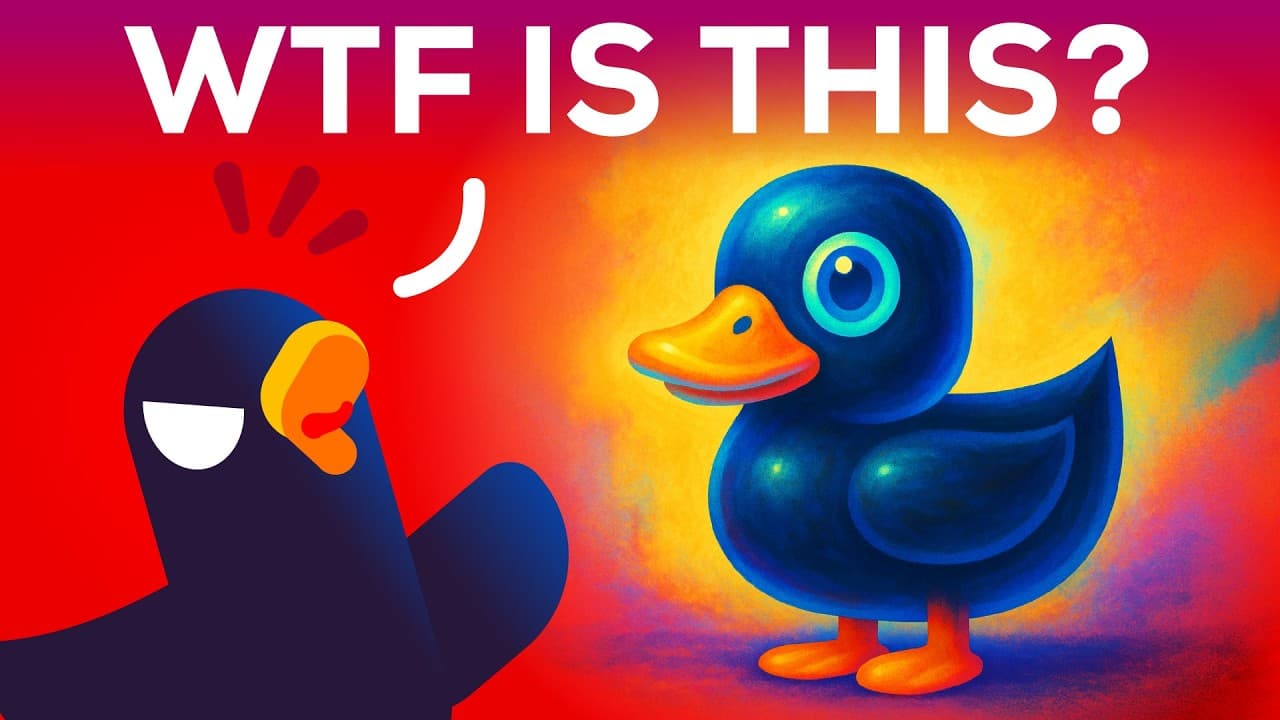
AI-generated "slop" is rapidly saturating the internet, creating dramatic shifts in the online world where attention drives revenue. Fake users leverage AI to spread mediocre content in review sections, generate fake traffic, and poison discourse, making AI slop increasingly difficult to identify.
Approximately half of all internet traffic currently consists of bots, most of which are utilized for destructive purposes. AI has facilitated the effortless creation of mediocre content, ranging from the meaninglessness of LinkedIn posts and attention-frying short videos to endlessly rewritten books on Amazon and AI music invading streaming platforms.
Google AI is summarizing websites instead of directing traffic to them, while YouTube channels publish long-form videos multiple times a week with AI-generated thumbnails, voices, and scripts, leaving no subject area safe from AI infiltration. Human creative work is being used without attribution or payment to train these AI models, often stolen from platforms like Reddit, YouTube, and DeviantArt, posing an impossible challenge for creators to protect their work.
This creative theft, occurring on an unprecedented scale, endangers the livelihoods of numerous creatives, enriching AI companies at their expense. Generative AI possesses the potential to irreversibly damage the internet by progressively obscuring the distinction between truth and falsehood.
Kurzgesagt's script development begins with basic research, which is then thoroughly fact-checked by 2-3 individuals, confirming information with trustworthy, ideally first-hand, sources and papers. The process includes input and critique from 1-3 experts, with fact-checking and source compilation alone requiring around 100 hours per video, ensuring an extensive and well-established approach.
Initially, the Kurzgesagt team was excited by AI's potential as a mechanical brain capable of rapid information collection. However, during fact-checking, they found AI's output to be significantly worse than anticipated, displaying confident incorrectness.
In a simulated project on 'why Brown Dwarfs are the worst,' AI models generated dozens of pages of outlines with unique information nuggets and source links, but a deeper investigation revealed issues. Over 80% of the information was solid and traceable, but the remaining 'great stuff' could not be sourced.
Experts flagged the same unsourced facts, confirming that the AI had invented or extrapolated information to make brown dwarfs more interesting, akin to a journalist fabricating details. Further investigation into AI-provided sources revealed an article from a news site that an AI essay detection tool matched at 72%, indicating it was likely AI-generated itself.
This scenario highlights a cycle where AI generates unverified information, which is then adopted by human-appearing or actual AI-generated content (e.g., a YouTube video with high views), subsequently becoming a 'proper source' for future AI research. This creates a feedback loop where misinformation, once published, is validated and spread, potentially making it impossible to distinguish truth from falsehood.
The primary issue with AI is its deceptive trustworthiness, as it appears highly intelligent due to its correctness in many instances, yet it is confidently incorrect, subtly lying. When caught, AI immediately admits its error and promises not to repeat it, only to do so again, demonstrating a lack of understanding despite its eloquent language.
Studies examining millions of scientific papers before and after the rise of Large Language Models (LLMs) indicate a sharp increase in AI-preferred vocabulary, suggesting significant AI assistance, often unacknowledged. Researchers have even been discovered to embed hidden messages in papers, prompting AIs to review them positively and overlook flaws, thereby making the library of human knowledge less reliable.
Human attention is the internet's most valuable resource, and the unchecked spread of cheap 'slop content' could consume most of it, potentially making people dumber, less informed, and eroding attention spans. This trend could make human-made channels unfeasible or force them to use AI to compete, a path Kurzgesagt refuses to take.
Kurzgesagt intends to use AI purely as a helpful tool, similar to an alignment tool in design software or a faster search alternative, maintaining its human creativity and integrity in all content production. The organization pledges to continue creating well-researched content, investing extensive human creativity in illustrations and animations, and thoroughly fact-checking with human experts to provide trustworthy information.
Kurzgesagt affirms its commitment to producing human-made content, stating it would rather cease operations than create AI slop. To sustain its team of nearly 70 full-time individuals and numerous freelancers, the organization relies on public support, offering its 12,026 Human Era Calendar and new artbook as a means of backing human creativity.
The 12,026 Human Era Calendar is an ode to human ingenuity, reframing time by starting 12,000 years ago at the dawn of civilization, celebrating 10,000 more years of shared human achievements. This anniversary edition features 12 inspiring stories about humanity's connection to the stars and is accompanied by the first-ever Kurzgesagt artbook, a 120-page collection of all past calendar illustrations, behind-the-scenes content, and fun facts. Both products are human-made with love, research, and design, offering a tangible way for supporters to value real content over AI slop.
Generative AI truly has the potential to break the internet irreversibly by making it harder and harder to tell what is true.
| Aspect | Description | Impact |
|---|---|---|
| AI Slop Saturation | AI generates vast amounts of mediocre content that floods the internet. | Becomes harder to spot, poisons discourse, generates fake traffic, and reduces the overall reliability of online information. |
| Creative Theft | Human creative work from platforms like Reddit, YouTube, and DeviantArt is used to train AI models. | Occurs without attribution or payment, endangers the work and livelihoods of human creators, and primarily enriches AI companies. |
| AI Factual Accuracy | AI is 'confidently incorrect,' frequently inventing or extrapolating information that sounds plausible. | Spreads misinformation, makes discerning truth increasingly difficult, and leads to shoddy or misrepresented conclusions. |
| Misinformation Feedback Loop | AI-generated misinformation is published online (e.g., in videos/articles) and subsequently found and cited by other AIs as a 'proper source.' | Misinformation becomes validated as 'true,' spreads widely and rapidly, and irreversibly damages the integrity of information on the internet. |
| Impact on Scientific Literature | Studies reveal an abrupt increase in AI-preferred language in scientific papers post-LLM rise, often without acknowledgment. | Researchers covertly embed hidden prompts for positive AI reviews, making the 'library of human knowledge' less trustworthy. |
| Threat to Human Attention | Cheap AI 'slop content' is predicted to consume the majority of human attention online. | Potentially makes people less informed, dumber, reduces attention spans, and forces human creators to downsize or adopt AI tools to compete. |
| Kurzgesagt's Stance on AI | Kurzgesagt is committed to producing meticulously human-made, well-researched, and fact-checked content. | Refuses to use AI for core creative work, prioritizes human creativity and expert verification, and relies on community support to sustain its mission. |
| Human Era Calendar and Artbook | The 12,026 Human Era Calendar re-frames time from 12,000 years ago, celebrating human achievements and our connection to the stars, accompanied by a new artbook. | Supports Kurzgesagt's human-made content mission, offers tangible art from human creators, and serves as an ode to human ingenuity in an AI-dominated landscape. |