

16 Oct 2025
A colossal 'new planet' has been discovered within Earth's crust, teeming with octillions of the most extreme beings thriving in deadly, absurd conditions. This deep biosphere, recently understood, boasts a volume twice that of all Earth's oceans and a total microbial biomass 20 times greater than all surface life.
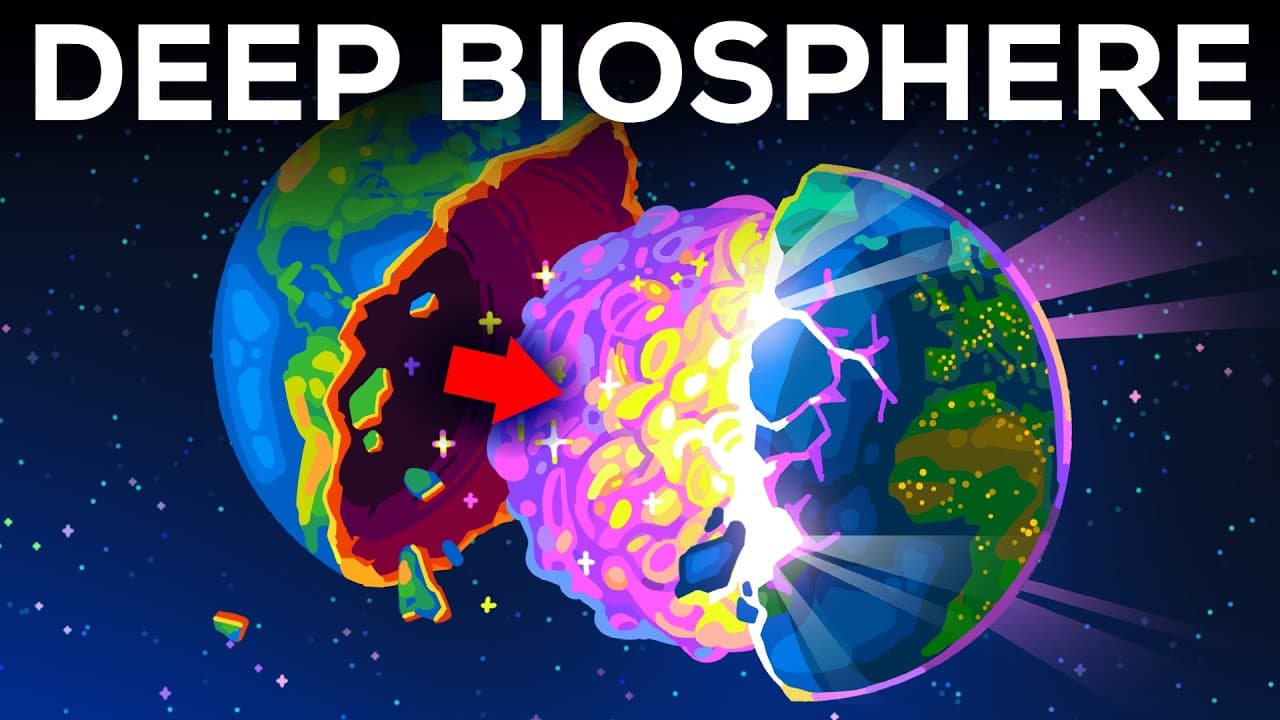
A 'new planet' has been found inside Earth's crust, home to octillions of extreme beings in a deadly hellscape, a discovery whose existence was only recently understood. This deep biosphere has a volume at least twice that of all Earth's oceans and contains more microbes than the rest of the planet, with a total biomass over 20 times greater than all humans, livestock, and animal wildlife.
Deep life is ubiquitous, existing below oceans, near volcanoes, beneath Antarctic glaciers, and under every imaginable landscape.
The journey into Earth's crust begins in the soil, a lavish four-way partnership of air, water, minerals, and organic matter, where life thrives. Below this lies a groundwater-saturated zone, rich in minerals and organic matter, where ambitious plant roots reach and scavengers live off decay, remaining cold from the most recent ice age. Deeper still is the bedrock, a foundation of solid rock filled with water-traversed fractures, representing a unique 'planet inside the planet'.
As drilling progresses, temperatures and pressures rise significantly; 400 meters down, pressure equals Venus's surface, and at 1000 meters, it reaches 30°C with almost no free oxygen. At nearly 4 kilometers, solid rock presses down with tens of thousands of tons of weight, creating pressures similar to the Mariana Trench and average temperatures of 120°C, intensified by magma plumes, radioactive decay from elements like thorium and uranium, and extreme salt concentrations.
Solid rock is not truly solid but traversed by cracks, voids, and tiny pores; porous rocks like sandstone, limestone, or basalt can be up to 40% empty space, and even denser granite contains fractures. This creates a gigantic, planet-spanning system of micro-caves filled with water and hardcore microbes. This system is dynamic, with rocks constantly mixing, shifting, and creating 'rock weather' through continental collisions and earthquakes, which continuously open new fissures for life and close others.
Octillions of hardcore microbes inhabit these depths. The bacterium Desulforudis audaxviator synthesizes its own food from carbon or sulfur in rock and forms an endospore through self-cannibalization to survive extreme conditions, potentially waiting thousands of years. Archaea like Altiarchaeum hamiconexum have protective double membranes, use nano-grappling hooks to tether themselves in oxygen-devoid cracks, harvest carbon dioxide, and may consume hydrogen. Other microbes form consortia, knitting together in protective biofilms, acting as miniature, specialized cells that process methane, electrons, sulfate, iron, nitrogen, or carbon dioxide.
Life in the deep biosphere employs extreme survival strategies, including incredibly slow metabolisms, up to a million times slower than surface microbes, allowing them to live for centuries or even millions of years by consuming minimal resources and conserving energy, sometimes even slowly cannibalizing themselves until a sudden resource influx.
Kilometers deep in limestone habitats, spaces exist for multicellular predators, including asexual worms 100 times longer than microbes, rotifers, and arthropods, that hunt and devour bacteria, though their origin in the deep is not fully understood.
Studying the deep biosphere faces significant challenges, including the inability to directly observe life under kilometers of rock, the risk of contaminating samples with surface microbes during drilling, and the difficulty of simulating extreme conditions in laboratories to observe slow-moving microbial life. Much knowledge is derived from genetic analysis of microbial slurries, revealing metabolic capabilities like nitrogen 'breathing' or methane consumption.
The deep biosphere represents a major scientific frontier with staggering diversity, most knowledge gained in the last two decades, holding vast undiscovered mysteries that could advance medicine, energy, and climate solutions. The existence of Earth's deep biosphere suggests that similar subsurface biospheres could exist across the universe, requiring only internal heat or radiation and suitable chemical composition, with potential for ten such locations in our solar system.
This is a proper frontier of science, super hard to study and most of what we know we learned in just the last 20 years.
| Feature | Description | Impact_on_Life |
|---|---|---|
| Location | Inside Earth's crust, below soil and groundwater, within bedrock | Defines the unique extreme environment, isolating life from surface conditions |
| Volume | At least twice the volume of all Earth's oceans | Indicates an immense habitat, supporting vast quantities of subsurface life |
| Biomass | Over 20 times greater than all surface humans, livestock, and animal wildlife | Highlights the dominance of microbial life underground, forming a major global reservoir of biomass |
| Darkness | Absolute absence of light | Life forms rely entirely on chemosynthesis, deriving energy from chemical reactions |
| Pressure | Equivalent to Venus's surface at 400m, Mariana Trench at 4km | Requires specialized cellular and molecular adaptations to withstand crushing forces |
| Temperature | 30°C at 1000m, average 120°C at 4km, hotter near magma plumes | Life forms are thermophilic or hyperthermophilic extremophiles, adapted to intense heat |
| Oxygen Levels | Almost no free oxygen at 1000m, completely devoid in many deep cracks | Life forms are anaerobic, utilizing alternative electron acceptors for metabolism |
| Radioactivity | Constant shower from decaying thorium and uranium within the crust | Microbes possess high radiation resistance, with mechanisms to repair DNA damage |
| Chemical Environment | Bathed in acid, salt, or extreme chemical mixes | Microbes adapt to various toxic or chemically challenging environments |
| Rock Porosity | Solid rock contains cracks, voids, and pores (up to 40% empty space in some rocks) | Provides physical habitats and pathways for water and nutrients within otherwise solid rock |
| Geological Activity | Continual 'rock weather' with shifting continents and earthquakes | Creates new micro-habitats and closes others, influencing resource distribution and microbial migration |
| Metabolic Rate | Up to a million times slower than surface microbes | Enables extremely long lifespans (centuries to millions of years) with minimal resource consumption |
| Nutritional Sources | Chemoautotrophy (from rock carbon/sulfur), CO2, hydrogen, methane, electrons, iron | Life is independent of surface photosynthesis, utilizing inorganic compounds for energy and biomass |
| Special Adaptations | Endospores (Desulforudis), protective double membranes, nano-grappling hooks (Altiarchaeum), biofilms (consortia) | Specific biological mechanisms for survival, protection, attachment, and cooperative resource acquisition |