

16 Oct 2025
In the 1950s, the United States secretly initiated Project Sundial, aiming to construct a single nuclear bomb powerful enough to obliterate human civilization. This terrifying concept, though never realized, emerged from the escalating nuclear arms race and the drive for ultimate deterrence.
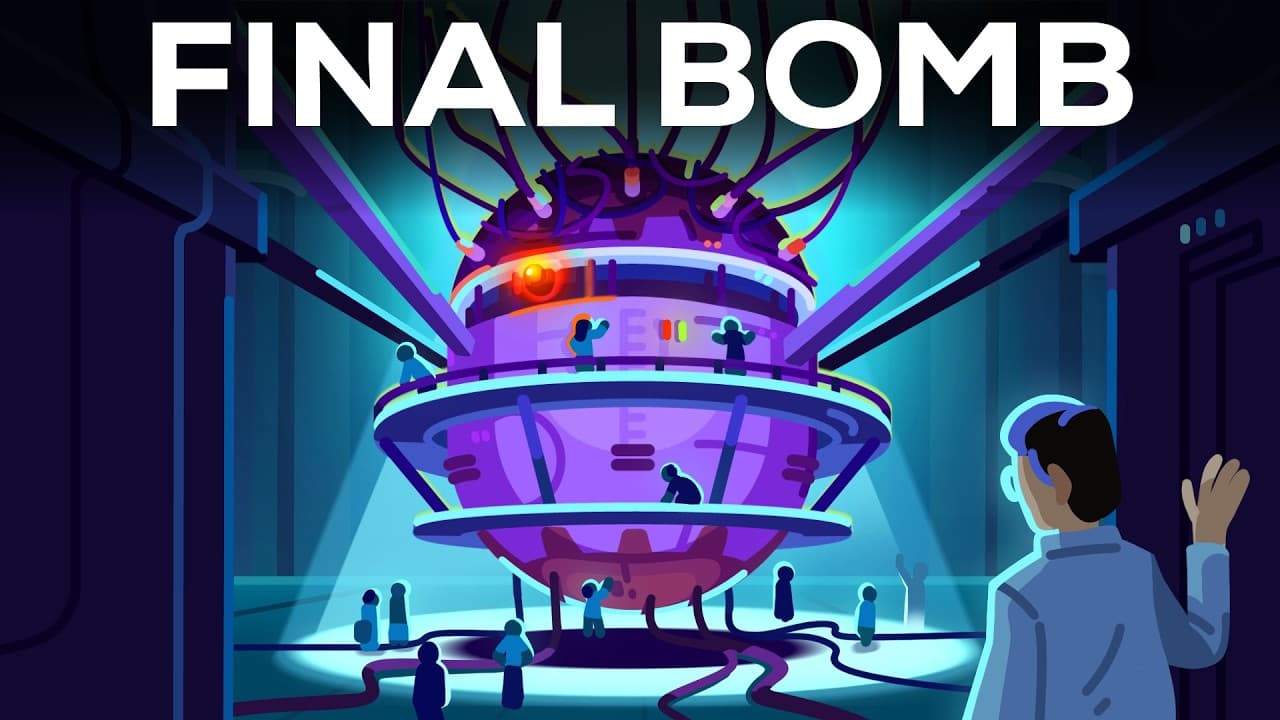
The US began Project Sundial in the 1950s, a top-secret initiative to create a single nuclear bomb with the capacity to destroy all human civilization, with most details remaining classified.
Project Sundial was envisioned to possess an energy equivalent to 10 billion tons of TNT, making it 3,000 times more powerful than all bombs dropped during World War II combined.
The period between 1905 and 1945 saw radical global shifts, transitioning from a world ruled by monarchs and dominated by horses to one marked by two devastating world wars, and the emergence of televisions, jet planes, and nuclear bombs.
The advent of nuclear weapons instilled profound terror, eliminating any sense of safety from the edge of space to the bottom of the ocean and breaking the collective psyche of the people alive at the time.
Without nuclear weapons, nations appeared to stand no chance in future conflicts, making them vulnerable to powers possessing such capabilities regardless of the size of their conventional armies.
In 1946, the US proposed the Baruch Plan to dismantle its atom bombs, share nuclear technology, and establish an international authority to prevent further weapon development, but the military advantage of nuclear power was deemed too significant to abandon.
The Soviet Union's unexpected detonation of its first atom bomb just three years later initiated a global nuclear arms race, rapidly escalating the world's nuclear arsenal from 9 bombs in 1946 to 20,000 by 1960.
Theoretical physicist Edward Teller, a key figure in the fission bomb's creation, relentlessly advocated for increasingly powerful nuclear weapons, despite the apprehension of many scientists and politicians, believing larger bombs ensured greater security.
Teller leveraged the US's fear of rapid Soviet nuclear progress to secure funding for his destructive vision, leading to the creation of the Hydrogen bomb, which uses a conventional atom bomb to trigger a fusion reaction.
The first hydrogen bomb test in 1952 obliterated a Pacific island, and a subsequent test two years later, 1,000 times more powerful than the Hiroshima bomb, solidified the terrifying reality of total human annihilation.
Edward Teller conceived Sundial as the 'final bomb,' an ultimate deterrent so destructive that it would render continued nuclear escalation pointless, effectively ending the arms race by threatening world destruction.
Weighing at least 2,000 tons, Sundial was designed to be a static 'backyard bomb,' not meant for delivery, whose detonation would generate a 50-kilometer fireball, incinerate everything within 400 km, cause a magnitude 9 earthquake, and lead to a catastrophic nuclear winter with widespread contamination and crop failures, resulting in mass global casualties.
Project Sundial was never built; scientists reacted with horror, politicians with disbelief, and even the US Military considered it an excessive 'crime against humanity' given its lack of strategic flexibility.
Despite rejecting Sundial, humanity collectively built a 'doomsday machine,' accumulating over 70,000 nukes during the Cold War, and still possessing approximately 12,000 nuclear weapons today, capable of destroying human civilization.
The world faces the prospect of another nuclear arms race, with the US investing a trillion dollars in modernization and China expanding its arsenal, emphasizing the ongoing existential threat these weapons pose to the species.
Humanity didn't build a doomsday bomb but a doomsday machine, consisting of tens of thousands of nuclear weapons capable of destroying human civilization.
| Key Aspect | Description |
|---|---|
| Project Sundial's Objective | A top-secret US project (1950s) to create a single nuclear bomb capable of destroying all human civilization. |
| Sundial's Estimated Power | Energy equivalent to 10 billion tons of TNT, 3,000 times more powerful than all bombs dropped in WWII. |
| Consequences of Detonation (Hypothetical) | A 50 km fireball, 400 km incineration radius, magnitude 9 earthquake, and a global nuclear winter causing widespread death. |
| Reason for Cancellation | Deemed a 'crime against humanity' by scientists and politicians due to its impracticality as an ultimate deterrence weapon. |
| Current Nuclear Reality | Instead of Sundial, humanity built a 'doomsday machine' with 12,000 nukes today, still capable of destroying civilization. |