
16 Oct 2025
This text critiques the tendency to externalize blame for personal financial decisions and life outcomes, advocating for individuals to take full responsibility for their choices, including debt accumulation and relationship dynamics. It emphasizes the importance of embracing risks and learning from mistakes as integral to a well-lived life, while also touching upon societal factors affecting male vitality.
A life embracing risks and challenges is superior to a cautious, risk-averse existence, as making mistakes and experiencing ups and downs are integral to living fully.
The discussion sarcastically references historical gender disparities in credit access, contrasting it with a modern woman's significant student loan debt, which is interpreted as a preference for debt over relationships with 'average' men.
A 26-year-old woman disclosed her total debt of $95,487.73 from credit cards and student loans, increasing to $110,938.83 with an auto loan, leading to immediate severe emotional distress.
Her debt accumulated between ages 18 and 26, primarily through a university bachelor's degree after a debt-free community college associate's, and further increased by a community college nursing degree; the majority was for living expenses beyond her means, consisting of two credit cards, five federal student loans, and five private Sally Mae loans.
Federal student loans carry manageable interest rates of 4-6%, whereas Sally Mae private loans have predatory rates between 9.88% and 16.28%, specifically targeting and exploiting students in dire need.
While acknowledging a lack of formal financial education, the individual is criticized for not utilizing readily available online resources, emphasizing that personal financial mistakes should be owned rather than excused by a lack of understanding.
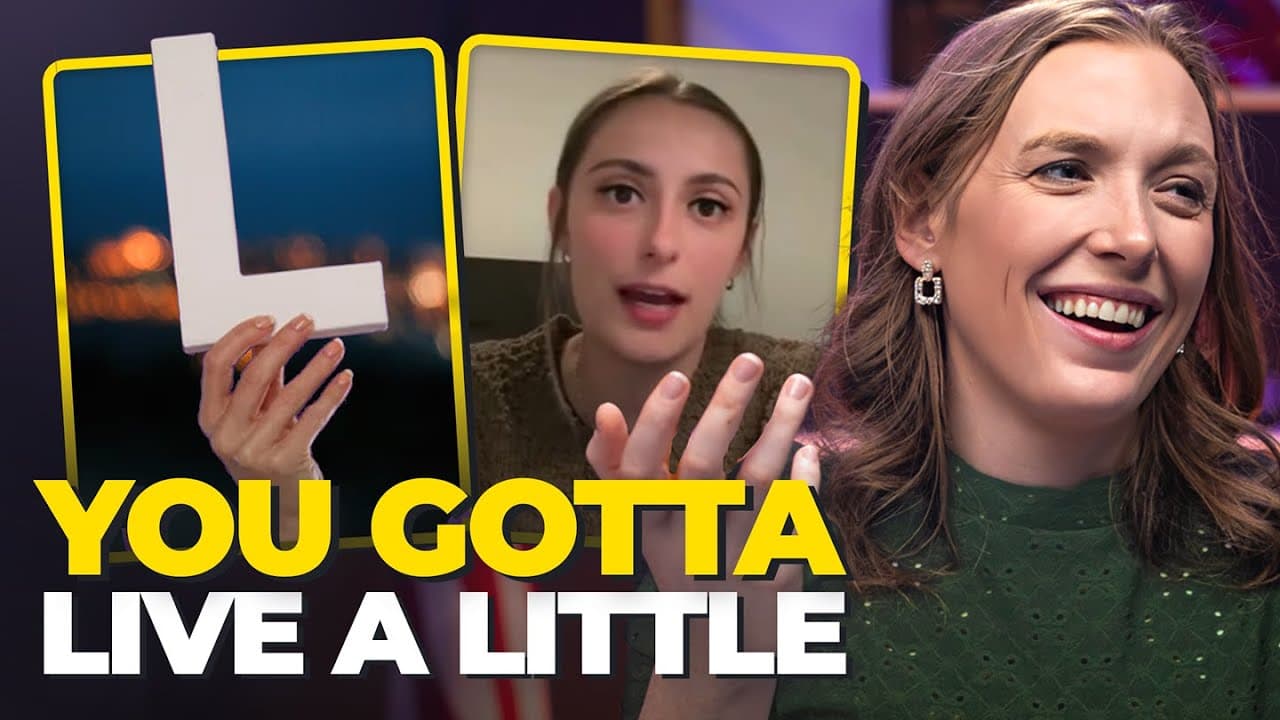
The ability to accept personal losses or mistakes ('eat an L') is presented as a crucial life skill, advocating for individuals to take responsibility for bad decisions, such as signing poor contracts or failed relationships, without externalizing blame.
Men face an often-unacknowledged threat from trace pharmaceuticals and endocrine disruptors (including estrogen from birth control) in tap water, alongside weekly consumption of plastic, contributing to a significant decline in male testosterone levels.
The average male's testosterone levels are half of what they were 50 years ago, declining by 1% annually, raising concerns about potential societal and existential risks without corrective measures.
Chalk.com offers a male vitality stack containing premium, clinically studied herbs designed to naturally boost testosterone, sperm count, and overall vitality, with one ingredient demonstrated to increase total testosterone by 20% in 90 days.
Boosting testosterone levels enhances mental clarity, improves decision-making and risk-taking capabilities, and subconsciously increases attractiveness to women due to pheromone changes.
A critique targets a perceived tendency, especially among women, to avoid personal responsibility for negative outcomes in life, such as debt, failed relationships, or career choices, by attributing them to external factors like manipulation or a lack of understanding.
Life involves dating relationships that don't work out and career paths that don't yield expected high-paying jobs; these are normal parts of a full life, and individuals should accept these outcomes rather than always finding external blame.
Excessive concern for how others perceive one's actions compromises personal freedom and leaves an individual vulnerable to manipulation, suggesting that true freedom lies in not needing external validation.
While regretting past poor choices is a natural human response, dwelling on them is unproductive; individuals should instead focus on learning from mistakes and making informed decisions based on current information.
I would rather have a life well-lived than a life where you never took a risk in life.
| KeyInsight | Detail |
|---|---|
| Value of Risk-Taking | A well-lived life embraces risks and experiences mistakes, which is fundamentally more fulfilling than a cautious, risk-averse existence. |
| Personal Accountability | Individuals must take full ownership of their choices, including financial debt and relationship outcomes, rather than attributing faults to external circumstances or a lack of understanding. |
| Critique of Blame Culture | A perceived tendency to externalize blame for negative life events, particularly among women, is criticized, advocating for the ability to 'take L's' or learn from losses. |
| Debt Consequences | Significant personal debt, often stemming from living expenses and specific educational choices, can lead to severe emotional distress and high-interest burdens from private lenders like Sally Mae. |
| Male Vitality Crisis | Environmental factors such as trace pharmaceuticals and endocrine disruptors in tap water, alongside plastic consumption, are linked to a drastic decline in male testosterone levels, posing health risks. |
| Impact of External Validation | Caring excessively about others' opinions compromises personal freedom and makes individuals vulnerable to manipulation, hindering authentic self-expression and decision-making. |
| Learning from Regret | While natural to regret poor decisions, dwelling on the past is unproductive; focus should be on learning from mistakes and making informed choices based on current information to move forward. |