

21 Oct 2025
The iPhone 17 Air, 17 Pro, and 17 Pro Max were unboxed, offering a first look at the series. Initial impressions cover design, heating, camera features, battery concerns, and the critical absence of physical SIM card slots in many models, along with regional variations.
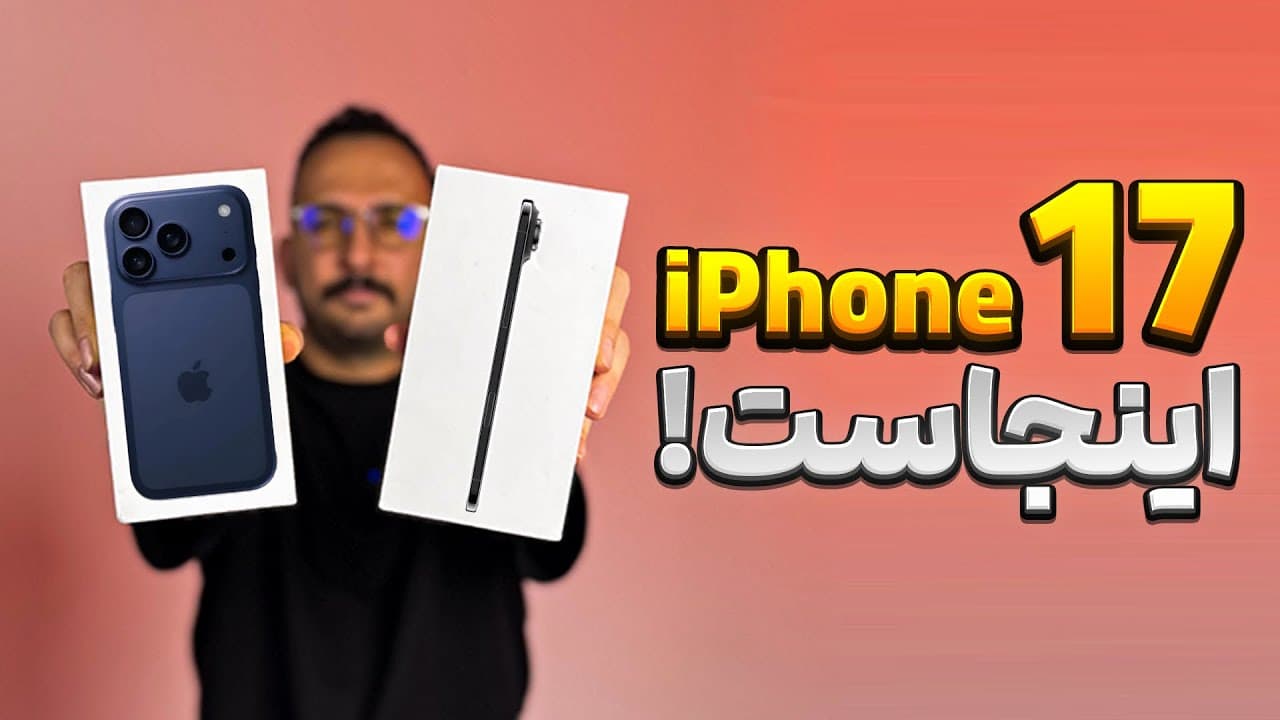
The initial unboxing included the iPhone Air, iPhone 17 Pro, and the orange iPhone 17 Pro Max, with detailed short videos available for color comparisons.
The iPhone Air offers a pleasing initial feel due to its thin, well-made, and high-quality material construction.
The black color of the iPhone Air is not considered beautiful, suggesting that delicate designs like the Air might better suit colors such as blue, white, or gold.
Upon initial power-on, even before activation, the top part of the iPhone Air became hot, a heating issue attributed to Apple's integrated setup, Mipa chip, and camera-as-battery design.
The iPhone Air's design feels amazing, being much more compact than the S25 Edge and featuring a smooth, spherical, well-made, and attractive form factor.
The iPhone Air features a single camera that performs well, and its selfie camera, unusually positioned on the right, shows significant improvements in its sensor, warranting detailed review.
Initial benchmarks showed promising battery consumption performance, but there is speculation and concern regarding a potential battery problem, with actual long-term usage details pending.
Priced $200 higher than the base version, the iPhone Air may not be worth buying unless for specific purposes like desiring extreme lightness or a compact screen size.
The iPhone Air completely lacks a physical SIM card slot in all regions and part numbers, a design choice likely due to its extreme thinness.
The absence of a physical SIM slot creates uncertainty regarding eSIM support in Iran, potentially rendering the phone an expensive iPod Touch if unsupported.
The iPhone Air is not expected to be very popular, although Apple likely introduced it to offer a new feature given the lack of significant changes in the regular and Pro series this year.
The blue color is considered more beautiful than the orange; however, the orange, a Hermes signature, is positioned as the trendy and luxurious color of the year for those wanting to display the latest model.
The orange model has aesthetic issues, including a significant visual difference between its aluminum frame and glass back, making it appear as if a mismatched glass piece was glued on. Additionally, the orange bezel around the display is noticeable and annoying.
The iPhone 17 Pro's design is widely considered uncreative and ugly in pictures, but it offers a surprisingly cool in-hand feel.
The iPhone 17 Pro features three 48-megapixel sensors with a significantly improved sensor compared to the previous generation, leading to extraordinarily high-quality photos and videos.
The screen is described as great, while the battery performance requires long-term testing for a full assessment.
The iPhone 17 Pro series also faces the eSIM and physical SIM card issue, with variations by region: American part numbers lack physical slots, Emirates part numbers are eSIM-only, Chinese part numbers have two physical SIM slots, and Singapore/Hong Kong models now feature one physical and one eSIM.
Chinese part numbers, while offering two physical SIMs, do not support the advanced AI capabilities, presenting a limitation for users prioritizing dual physical SIMs.
An eSIM integrates the SIM card chip directly into the phone, allowing operators to provide service via a QR code that configures the operator's data on the internal chip, functionally similar to a physical SIM card.
Buyers in a hurry are advised to choose part numbers with at least one physical SIM card, or a dual physical SIM Chinese part number if AI limitations are not a concern, given the ongoing uncertainty of eSIM support.
The iPhone 17 Pro's aluminum frame and enhanced cooling system contribute to better heat dissipation compared to the iPhone 16 Pro Max, resulting in less heating during benchmarks.
The channel plans to release various videos on the iPhone 17 series, including detailed reviews, comparisons with competitors, camera-specific videos, and long-term performance reviews for all four models.
If SIM card support is not established, the iPhone Air will function primarily as an expensive iPod Touch.
| Aspect | iPhone Air Insight | iPhone 17 Pro/Pro Max Insight |
|---|---|---|
| Initial Feel & Design | Extremely thin, well-made, and pleasing to hold, but the black color is aesthetically unsuitable for its delicate design. | The design appears unappealing in photos but offers a surprisingly cool tactile experience; the blue color is preferred over the trendy orange. |
| Heating & Performance | The top part heats up quickly upon initial power-on, and potential battery issues are speculated. | An improved cooling system and aluminum frame lead to better heat dissipation compared to the iPhone 16 Pro Max, resulting in less heating during benchmarks. |
| Camera Features | It features a single functional camera, and the selfie camera, unusually positioned on the right, demonstrates significant sensor improvements. | Equipped with three 48-megapixel sensors, the camera shows a major generational improvement, delivering exceptionally high-quality photos and videos. |
| SIM Card Support | Completely lacks a physical SIM slot in any region, creating concerns about its usability if eSIM is not locally supported, potentially functioning as an expensive iPod Touch. | SIM card support varies by region: American models are eSIM-only, Chinese models offer two physical SIMs (though lacking AI features), and Singapore/Hong Kong models now combine one physical SIM with one eSIM. |
| Value & Popularity | Priced $200 higher than the base version, its purchase is only justified for specific needs like extreme lightness; overall, it is not expected to be very popular. | The trendy orange color presents aesthetic flaws like mismatched material appearance and a noticeable bezel; AI capabilities are limited on dual physical SIM models, impacting the user experience. |