27 Oct 2025
Sam Altman, the CEO of OpenAI, has transformed the company into a formidable leader in artificial intelligence, navigating significant challenges and driving groundbreaking innovations. OpenAI's story includes pivotal moments, from its non-profit origins with Elon Musk to the unprecedented success of ChatGPT and continuous advancements in AI models.
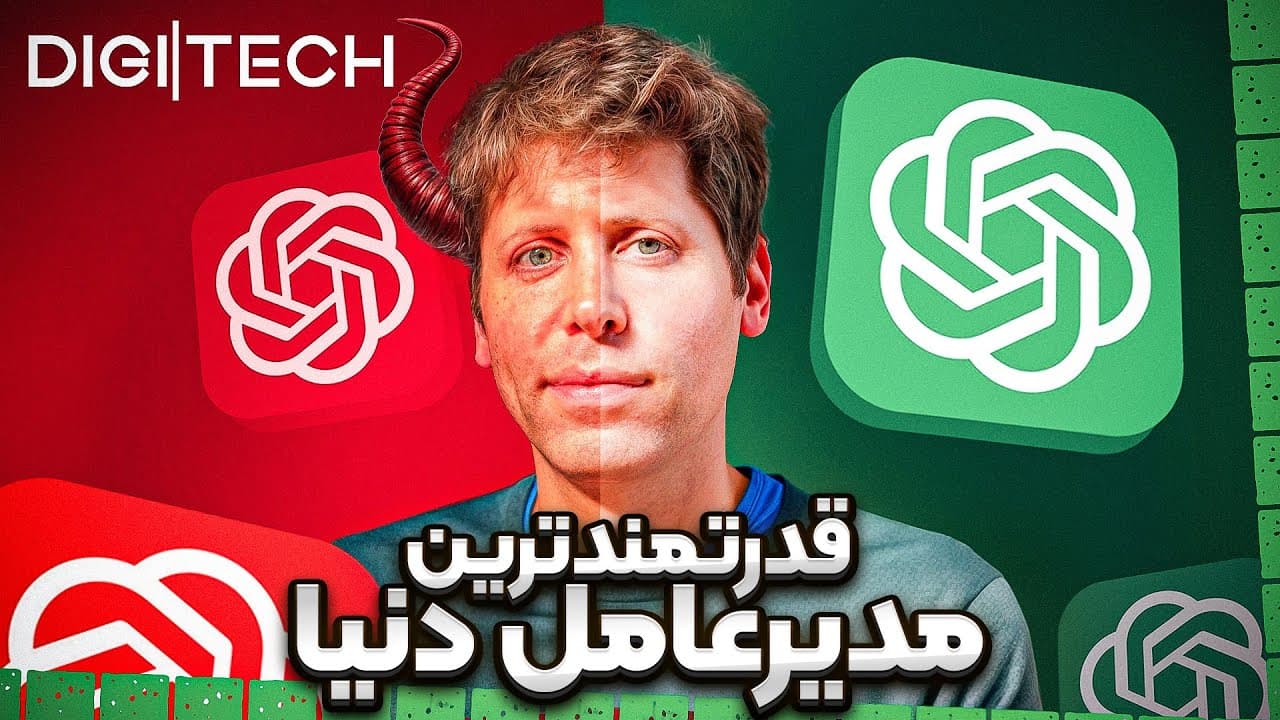
Sam Altman, CEO of OpenAI, is a powerful figure in artificial intelligence, whose speeches consistently provide new impetus to the field. He skillfully guided OpenAI through many challenges, ultimately advancing industry boundaries beyond competitors.
Born in Chicago, Altman's passion for technology ignited at age eight when his family purchased a Macintosh computer. He later dropped out of his computer science undergraduate degree at Stanford University, ten years before co-founding OpenAI.
Altman's initial venture, Loopet, a location-sharing app, faced difficulties due to the absence of app stores. He subsequently entered Y Combinator, a startup boot camp, where he encountered Paul Graham, who became his mentor and recognized his innate leadership abilities.
Altman assumed the role of CEO at Y Combinator, leveraging this position to engage directly with Silicon Valley luminaries and establish a strong reputation across the technology sector.
Elon Musk grew increasingly concerned about the potential for artificial intelligence to harm humanity and its misguided development, advocating for regulatory oversight similar to food and drug administrations. He expressed apprehension regarding Google's monopoly in AI and sought collaborations to ensure safe AI advancement.
OpenAI was established at the end of 2015 as a non-profit organization with the overarching goal of making Artificial General Intelligence (AGI), a form of human-level AI, accessible to everyone. Key founders included Sam Altman, Elon Musk, Greg Brockman, and Ilya Sutskever.
With Elon Musk's involvement, OpenAI secured an initial capital of $1 billion, enabling it to aggressively compete with Google. The company's core mission focused on creating value for people and ensuring the safe development of AI, intending for its technology to be openly available, thus its name.
OpenAI's first official product, OpenAI Gym, an open-source kit for reinforcement learning algorithms, was released in 2016. Early projects, such as OpenAI Five for the game Dota 2, sometimes failed to meet success, and the team often pursued random projects without a specific strategy during a period known as 'AI winter'.
A turning point occurred in 2017 with Google's influential Transformers paper, detailing modern AI architecture. OpenAI strategically leveraged this knowledge to redefine its goals, focusing on data-driven AI for both profitability and revolutionary impact, leading to significant investments in computing infrastructure.
Elon Musk departed OpenAI in early 2019 due to misaligned interests, subsequently withdrawing his financial support. This event prompted OpenAI to update its corporate structure, shifting its focus towards AGI development and attracting a crucial $1 billion investment from Microsoft, along with a commitment to Azure infrastructure.
In 2019, OpenAI Five defeated the Dota 2 world champion team, showcasing AI's capability at human performance levels, and the GPT-2 model became commercially available. 2020 saw the introduction of GPT-3 with 175 billion parameters, significantly advancing OpenAI's language models globally, followed by the DALL-E imaging model and GitHub Copilot in 2021.
The beta version of ChatGPT, based on OpenAI's GP language model, launched in November 2022 and rapidly became the world's most popular artificial intelligence service. It set a record by acquiring one million users in just five days, prompting competitors like Google (Bard/Gemini) and XAI (Grok) to accelerate their own AI chatbot development.
ChatGPT currently leads the AI chatbot market with over 840 million users, and OpenAI commands approximately three-quarters of the artificial intelligence market. The company further enhanced user experience with improvements to DALL-E and GPT models.
In a sudden and unexpected move, OpenAI's board of directors dismissed Altman, citing a loss of confidence. This decision provoked widespread backlash from Microsoft and a majority of OpenAI employees, leading to Altman's reinstatement within 24 hours following intense negotiations.
Elon Musk subsequently filed a lawsuit against OpenAI, alleging it had deviated from its original non-profit, open-source mission to become a capitalist entity focused on shareholder interests. OpenAI countered, suggesting Musk's complaint stemmed from his exclusion from the organization's progress; Musk eventually abandoned the lawsuit.
OpenAI introduced the Sora model, a revolutionary video production tool, and a reasoning model designed to tackle complex problems with enhanced cognitive abilities. The company stands more powerful than ever, boasting millions of users and strategic partnerships with major companies like Microsoft and Apple, with its collaboration with Nvidia contributing to the latter's growth. OpenAI faces future challenges including potential regulatory hurdles and the upcoming arrival of Artificial General Intelligence.
He says Smallman is a natural leader. That's why if you abandon him on an island of cannibals and return a few years later, you'll find him ruling there.
| Event/Milestone | Year/Period | Key Detail/Impact |
|---|---|---|
| Sam Altman's Tech Spark | Age 8 | Received a Macintosh, sparking his profound interest in technology. |
| OpenAI Founding | End of 2015 | Established as a non-profit for AGI; secured initial $1 billion capital with Elon Musk's involvement. |
| OpenAI Gym Launch | 2016 | Released as the first official product, an open-source kit for reinforcement learning. |
| Google Transformers Paper Influence | 2017 | A pivotal external event that spurred OpenAI's shift to a data-driven AI strategy. |
| Elon Musk Departs OpenAI | Early 2019 | Left due to misaligned interests, leading to the withdrawal of his financial support. |
| Microsoft's Strategic Investment | 2019 | Secured $1 billion investment and a commitment to Azure infrastructure, revitalizing the company. |
| OpenAI Five Victory in Dota 2 | 2019 | AI defeated world champion team, demonstrating artificial intelligence at human performance levels. |
| GPT-2 Commercialization | 2019 | The GPT-2 language model became commercially available to customers. |
| GPT-3 Introduction | Early 2020 | Unveiled with 175 billion parameters, establishing a new benchmark for powerful language models. |
| DALL-E Imaging Model Launch | 2021 | Introduced as a revolutionary, albeit initially basic, image generation model. |
| GitHub Copilot Official Introduction | 2021 | Launched as an AI for code generation, a direct and successful collaboration with Microsoft. |
| ChatGPT Beta Launch | November 2022 | Achieved unprecedented user growth, reaching 1 million users in just five days, significantly boosting AI's public profile. |
| Sam Altman's Dismissal and Reinstatement | Late 2023 | A sudden board decision to remove Altman was reversed within 24 hours due to widespread industry and employee backlash. |
| Sora Model Introduction | Recent | Unveiled as a video production tool, pushing the boundaries of creative video generation and realism. |
| Reasoning Model Introduction | Recent | Introduced with enhanced thinking capabilities, designed to perform better in complex problems and difficult questions. |