

16 Oct 2025
Offset Geometric Contact (OGC) represents a significant advancement in computer simulation, achieving highly realistic, penetration-free interactions between digital objects. This novel technique overcomes the limitations of prior methods by enabling massively parallel processing and delivering unprecedented speed while maintaining physical accuracy.
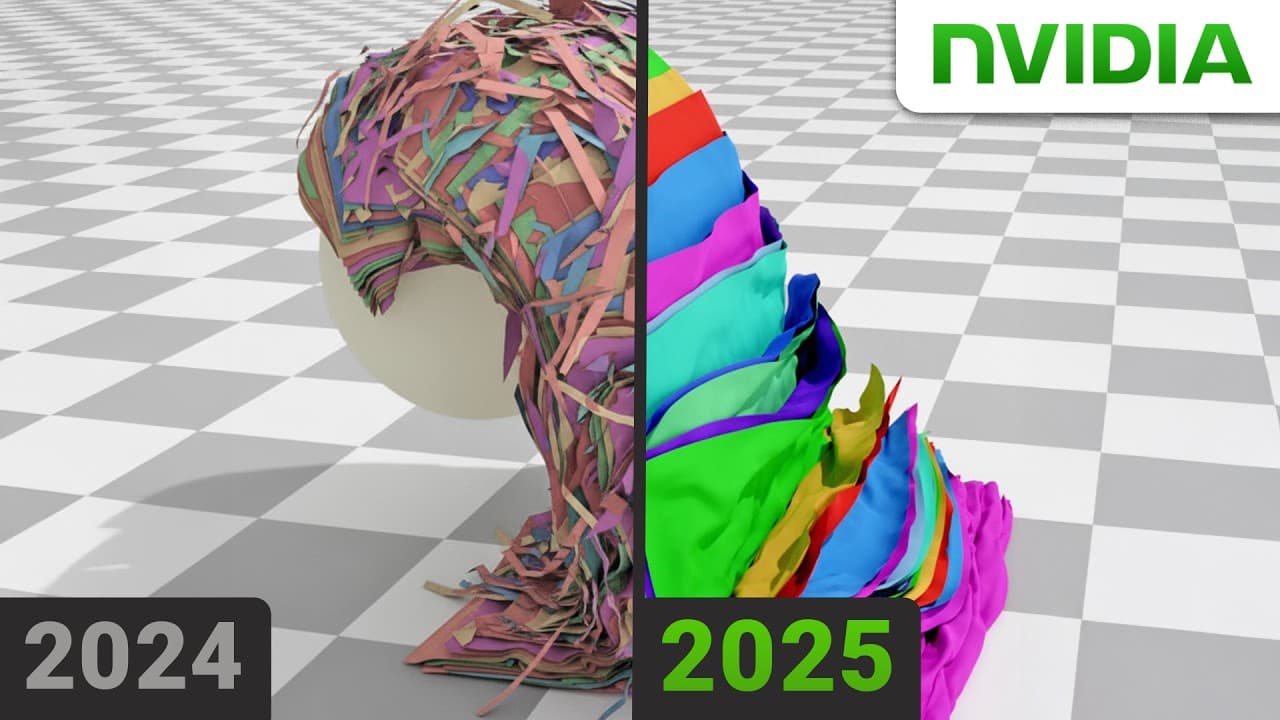
Computer simulations aim to render virtual objects acting like real-world objects, meaning they cannot pass through one another. Objects passing through each other, known as penetration, instantly breaks the illusion of reality in video games or virtual worlds.
Earlier techniques, such as Incremental Potential Contact (IPC), struggled with efficiency and realism. A small, local collision issue could force the entire simulation to a halt, making it incredibly slow and expensive. These methods sometimes applied forces at strange angles, causing objects like cloth to appear unnaturally stretched and distorted.
Offset Geometric Contact (OGC) is a new technique that dramatically improves penetration-free simulations. It enables each part of the simulation to move independently and only slows down when actual collisions are imminent, allowing the rest of the simulation to continue at full speed.
OGC creates an invisible, perfectly fitted 'force field' or 'suit of armor' around every object, which pushes directly outwards, perpendicular to the surface. When objects approach, their force fields interact, pushing them apart cleanly and preventing unnatural stretching artifacts. This method offers truly penetration-free simulations for movies, games, and virtual worlds.
Thanks to local bounds and clean forces, OGC is massively parallel and runs exceptionally fast on GPUs, demonstrating performance more than 300 times faster than previous methods. It can also recover from an incorrect initial state and maintains structural integrity in complex scenarios, such as tightening knots in simulated yarn.
Despite its advancements, OGC is not perfect; some simulations with clothing can appear 'rubbery,' and contact forces are not always ideal. In specific, high-speed, low-collision scenarios, the method might even be slower than older techniques. However, it represents an incredible step forward, with future research expected to address these minor imperfections.
This technique is not only way better, but also more than 300 times faster than the previous method.
| aspect | previousMethod | newMethod |
|---|---|---|
| Core Problem Addressed | Objects could penetrate each other (breaking illusion); simulations suffered global halts from minor local issues. | Achieves truly penetration-free simulations; handles collisions locally without stopping the entire system. |
| Performance & Efficiency | Incredibly slow and expensive; small problems forced a grinding halt. | Massively parallel, over 300 times faster; only slows down parts directly involved in collisions. |
| Physical Accuracy & Realism | Applied forces at strange angles causing unnatural stretching/distortion of objects (e.g., cloth). | Uses clean, perpendicular forces via 'force fields' to prevent stretching; maintains integrity in complex interactions (e.g., knots). |
| Key Mechanism | Acted like a city-wide traffic controller, stopping everything for any minor incident. | Employs individual, super-smart sensors for each object, allowing localized movement and interaction. |
| Current Limitations | Severe limitations in speed and visual realism. | Simulated clothing can feel 'rubbery'; contact forces are not always perfect; can be slower in specific high-speed, low-collision scenarios. |