
29 Sept 2025
Apple introduced its new artificial intelligence features, branded "Apple Intelligence," at its annual WBDC event, generating significant excitement for its potential to revolutionize user experience. However, nearly a year later, many announced features remain unavailable or perform poorly, raising questions about the company's AI strategy and execution.
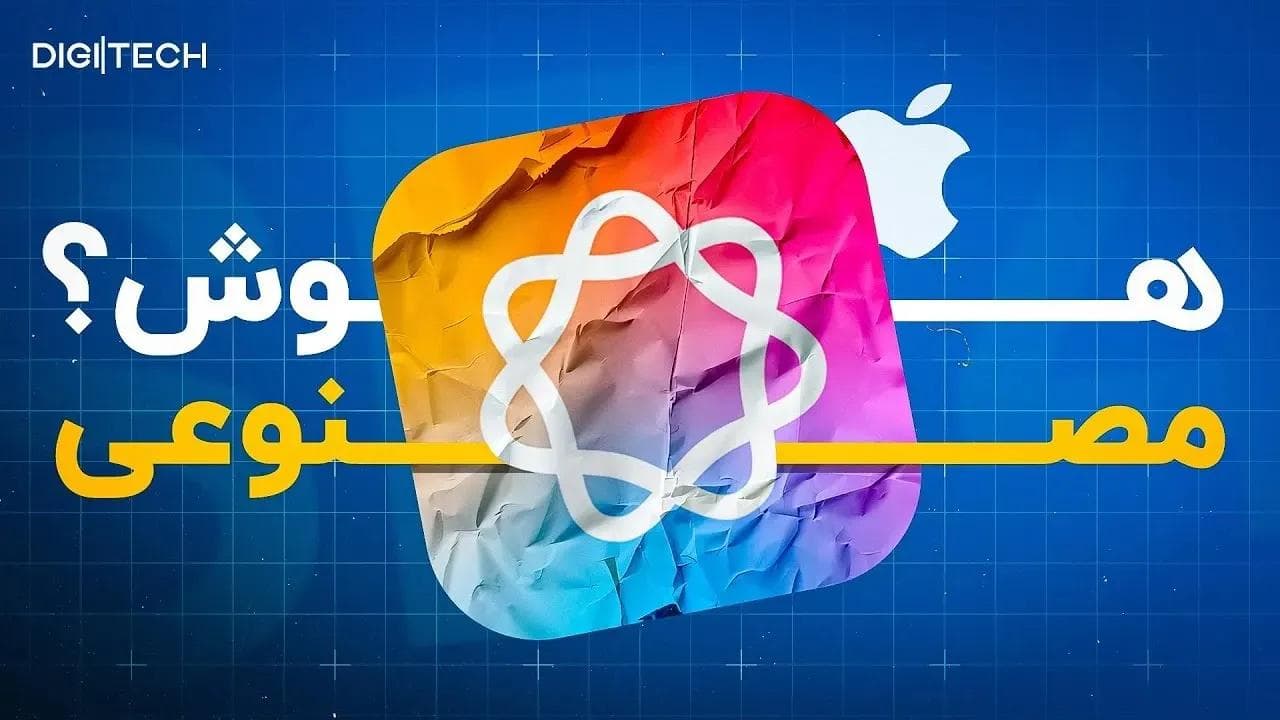
Apple devoted 40 minutes at its annual WBDC event to showcase new artificial intelligence features, branding them 'Apple Intelligence' rather than using the generic term AI.
The initial unveiling of Apple Intelligence created high expectations for its transformative impact on iPads, iPhones, and MacBooks, but nearly a year later, many promised features are still unavailable or function unsatisfactorily.
Apple's chip designer, Johnny Seruji, and hardware SVP, John Ternos, laughed dismissively in a December interview when asked about Apple being behind in AI, signaling a potential lack of seriousness or confidence regarding their AI endeavors.
Apple's historical tendency to announce products without fully functional prototypes, exemplified by the AirPower charging mat, parallels the introduction of Apple Intelligence without ready-to-use demos, indicating potential product immaturity.
Apple Intelligence partially relies on OpenAI's ChatGPT for Siri's advanced queries, suggesting Apple lacked sufficient time to independently develop its own comprehensive AI system, which is uncharacteristic for a company that typically builds its own core technologies.
The iPhone 16 was introduced without any new Apple Intelligence features, and the subsequent iOS 18.1 update delivered only a fraction of the promised features, most of which were still in beta mode and unusable.
Kirk Federighi explained the slow rollout of Apple Intelligence as a deliberate strategy for gradual integration, but this contradicts prior marketing and the removal of advertised Siri features, which are now delayed for years.
The text writing feature of Apple Intelligence performs adequately for tasks like grammar correction, but competing AI models like Grac and GPT deliver superior results, especially given Apple Intelligence's inability to understand Persian and its confusion with mixed-language inputs.
Apple Intelligence's notification features, including prioritized and summarized notifications, are largely dysfunctional; the BBC even threatened legal action over incorrect news summarization, leading Apple to remove the feature.
Smart replies, while sometimes functional for specific English inputs, demonstrate limited utility and are not considered a revolutionary feature, raising questions about their overall effectiveness.
Apple Intelligence's image generation is of lower quality compared to competitors like GPT Fiad, often failing to accurately recognize facial formats for stylization, and its emoji creation feature lacks practical use cases.
The photo search feature has improved, allowing users to make more complex and specific queries, such as retrieving photos based on location and people.
Apple's photo eraser feature functions to some extent for removing unwanted elements but is significantly inferior to Samsung's offering, which more effectively recognizes objects and intelligently reconstructs backgrounds.
Apple's traditional strategy of entering competitions late but excelling in hardware (e.g., iPhones, AirPods) does not translate effectively to AI software, where the company appears to have historically underinvested.
Siri has consistently been criticized for its limited capabilities since its introduction with the iPhone 4S, struggling with simple commands and lagging far behind modern AI assistants that can perform complex multi-step tasks.
Apple Intelligence, as currently implemented, falls short of its potential and is critically described as 'Apple Magic' rather than true intelligence, reflecting a significant disparity between expectations and actual performance.
Unfortunately, what Apple has introduced cannot be called Apple Intelligence; it is more like Apple Magic.
| insightCategory | observation | critiqueImplication |
|---|---|---|
| Executive Confidence | Apple executives (Johnny Seruji, John Ternos) laughed off concerns about being behind in AI. | This signaled a dismissive attitude towards competitive developments and potentially overconfidence or lack of a robust plan. |
| Product Readiness | Apple Intelligence was introduced without fully functional demos, similar to past product failures like AirPower. | This indicates that many features were rushed and not fully developed or stable at the time of announcement. |
| Strategic Dependence | Apple Intelligence partially relies on OpenAI's ChatGPT for Siri's advanced functions. | This is uncharacteristic for Apple, suggesting a hurried integration due to insufficient internal AI development time. |
| Rollout & Delivery | iPhone 16 lacked AI features, and iOS 18.1 provided an incomplete set of beta-stage features; advertised Siri functionalities are delayed for years. | Features are not ready for prime time, contradicting Apple's usual polished product launches and marketing promises. |
| Text Generation | Apple Intelligence text generation works, but competitors (Grac, GPT) offer better quality and broader language support. | While functional, it does not surpass existing solutions and has limitations for non-English users, specifically Persian. |
| Notification Features | Prioritized and summarized notifications are largely dysfunctional, leading to public criticism and the removal of the news summarization feature after BBC's complaint. | Major quality issues demonstrate a failure to deliver on core AI functionalities, significantly impacting user experience. |
| Image Editing (Eraser) | Apple's photo eraser feature is functional but significantly inferior to Samsung's more intelligent object recognition and background reconstruction. | Apple's AI capabilities in advanced image manipulation lag behind competitors, offering a less refined user experience. |
| Core AI Foundation | Siri's historical weakness, described as a 'dumb banana' since its iPhone 4S introduction, persists. | This reflects a long-standing underinvestment in AI software, making it difficult for Apple to suddenly catch up to competitors with truly intelligent features. |