

29 Sept 2025
The global adoption of eSIM technology is transforming mobile connectivity by eliminating physical SIM cards and enhancing user experience. Despite its widespread use in many countries, its serious implementation in certain regions, like Iran, has been driven by devices like the iPhone and local operator responses.
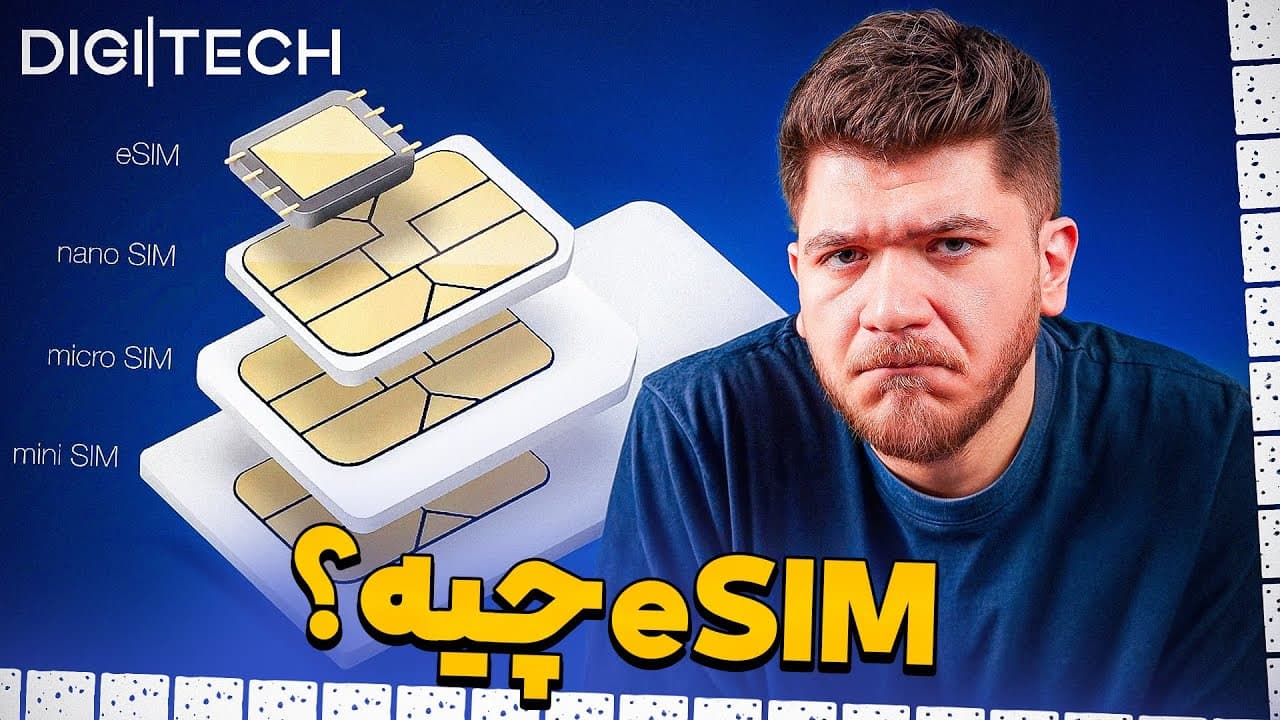
The Internet is a globally adopted technology, and eSIM has been in use for several years in first-world countries and those prioritizing infrastructure development over filtering.
The iPhone, initially available worldwide as a SIM-only phone, significantly boosted interest in eSIM technology, prompting local operators to offer similar services.
Iranian mobile operators, including Irancell and the First Mobile Operator, responded to the rising demand by announcing their readiness to offer eSIM services, with Irancell claiming to have tested the technology since 2099.
eSIM, or embedded SIM, is a SIM card integrated directly onto a phone's motherboard, eliminating physical slots and providing a transformative user experience by removing the need for physical SIM cards.
eSIM offers advantages such as reduced space consumption, lower power usage, increased stability, protection against SIM swap attacks, and the ability to manage multiple profiles simultaneously on a single device.
The EUIC standard controls eSIM functionality, allowing devices to support multiple profiles, with some phones capable of managing up to 12 virtual SIM cards for various purposes like international travel.
The global eSIM market was valued at $9 billion in 2023, with predictions of an 11% annual growth to reach $14 billion by 2027, and approximately 75% of phones globally are expected to support eSIM technology by 2030.
The first device to introduce eSIM was the Galaxy Gear S, followed by cellular versions of the Apple Watch, with most cellular Apple Watches and iPhones from the 10s series onwards supporting it.
Modern devices like Samsung A56 and above, Xia 14T and newer, and iPhones from the TS series onwards (depending on part numbers) offer eSIM functionality.
iPhones with eSIM-only support are available in specific countries such as Bahrain, UAE, Qatar, Saudi Arabia, Kuwait, the United States, Japan, Mexico, Canada, and Oman, identifiable by specific part numbers.
The iPhone 11 is notable for being the only iPhone in its series that still supports two physical SIM cards and does not feature eSIM technology.
Services like FlyToi in Iran offer 'Troll eSIMs' for nearly 200 countries, providing data-only internet access at a lower cost than traditional roaming, without offering a phone number.
Using a data-only eSIM for international travel, such as a 10GB plan for Turkey costing 287,000 Tomans, is often significantly cheaper than incurring roaming charges with a domestic SIM.
eSIMs are typically activated by scanning a QR code provided by an operator, which automatically adds the profile to the phone's SIM card settings, though an internet connection is required for this process.
Eliminating the physical SIM tray frees up internal phone space, potentially allowing for larger batteries and extending usage time; for instance, eSIM-only iPhones offer about two hours more movie playback.
In Iran, practical support for eSIM by mobile operators remains largely absent, posing a significant challenge to its widespread adoption despite the technology's potential benefits.
eSIM adoption is limited by the need for operator and device support, hardware compatibility similar to 5G requirements, and ongoing surveillance concerns, as removing a physical SIM no longer prevents tracking.
The introduction of eSIM technology is expected to finally justify the use of cellular Apple Watches in Iran, enabling calls and SMS functionality without needing a connected iPhone.
Most commercially available travel eSIMs provide data-only services, with full-service eSIMs that include a phone number typically requiring citizenship or residency in the associated country.
While an Apple Watch Cellular can share a number with an iPhone, it typically requires a separate data plan, even from operators like T-Mobile.
This eSIM is a very good thing; it will transform your user experience and eliminate the need for a physical SIM card and the hassle of having to go to the operator's store or the postman's.
| Insight | Description |
|---|---|
| Core Benefit of eSIM | Transforms user experience by eliminating physical SIM cards, simplifying activation, and reducing hassle. |
| Global Market Value & Growth | Valued at $9 billion in 2023, projected to reach $14 billion by 2027 with an 11% annual growth rate. |
| Future Adoption Rate | Approximately 75% of global phones are expected to support eSIM technology by 2030. |
| Pioneers of eSIM | The Galaxy Gear S was the first device, followed by cellular Apple Watches and later iPhone 10s onwards. |
| Enhanced Device Performance | Frees up internal space, leading to less power consumption, improved stability, and potentially longer battery life (e.g., +2 hours video playback for eSIM-only iPhones). |
| Multi-Profile Management | Supports multiple profiles (up to 12) on one device for various uses (e.g., international travel) via the EUIC standard. |
| Data-Only Travel eSIMs | Services like FlyToi offer affordable data-only eSIMs for nearly 200 countries, significantly cheaper than traditional roaming. |
| Activation Method | Activated simply by scanning a QR code, which downloads the profile directly to the device. |
| Limitations in Iran | Lack of practical eSIM support from local mobile operators currently hinders widespread adoption. |