
29 Sept 2025
The increasing prevalence of smart glasses raises a fundamental question about their long-term role: will they fully replace mobile phones or serve as complementary devices? Examining current technological limitations, user experience, and societal concerns, the path to widespread adoption and integration remains complex.

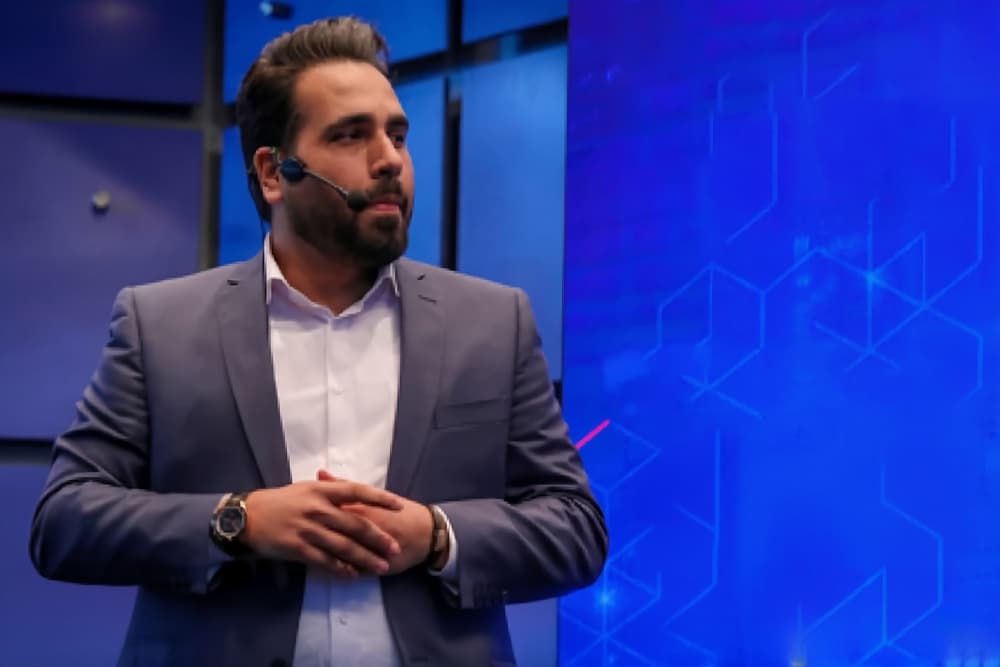
A discussion on Today's Talkshow introduces smart glasses as a key topic, with one speaker expressing personal interest in devices like Meta Ray-Ban, despite previous experiences with Google Glass.
The central question explored throughout the video is whether smart glasses will ultimately replace mobile phones entirely or act as complementary devices to existing technology.
Despite years of development by companies, smart glasses have not yet become an essential, universally adopted gadget for consumers.
High price and current technological imperfections are identified as key reasons preventing smart glasses from becoming essential, as they cannot fully replicate all phone functionalities.
Google Glass initiated the smart glasses concept, acting as a prototype ahead of its time in 2012 by offering advanced features like navigation, head-up displays, games, and video calls, though with limitations.
Modern smart glasses typically incorporate an assistant, a camera for recording, and various sensors for movement, though features like calls and multi-language support (e.g., Persian) are still developing.
The industry's crucial future direction involves moving away from Virtual Reality (VR) towards Augmented Reality (AR), which overlays digital information directly onto the real world.
AR applications could include street navigation, interactive games projected onto physical surfaces, real-time financial tracking, and instant identification of nearby establishments like cafes.
The Holiday company developed innovative AR glasses featuring a miniature pico projector on the lens and a ring-shaped controller for seamless menu navigation.
Devices like the Apple Vision Pro show significant promise with their refined execution, but achieving a smaller form factor and improved battery life is critical for broader acceptance.
A major hurdle for smart glasses replacing phones is battery longevity, as all-day usage demands a compact, long-lasting battery seamlessly integrated into the glasses, posing hardware challenges.
Developing appropriate processors, possibly optimized mobile processors or cloud-based solutions, and managing heat dissipation are significant hardware considerations for smart glasses.
Achieving a compact, lightweight, and socially acceptable design is crucial, as current prototypes are often too bulky for daily wear.
The shift from tactile phone interfaces to voice and gesture controls for smart glasses presents a barrier, as users generally resist significant changes in interaction methods.
The most substantial challenge involves privacy, as the ability to discreetly record video or audio without consent raises serious ethical questions, even with existing LED indicators that can be disabled.
Potential solutions for privacy concerns include glasses emitting a frequency to signal recording, automatically blurring faces, or implementing user-configurable 'blocking' features similar to those depicted in Black Mirror.
The television series Black Mirror is referenced for its insightful portrayal of future technologies and their societal impacts, including advanced privacy controls.
A brief discussion touches upon the intriguing concept of nanobots, as seen in recent movies, highlighting their revolutionary potential in various applications like weaponry or medicine.
High-end smart glasses like the Apple Vision Pro are currently expensive ($3,500), while more accessible options like Meta Ray-Ban ($300) and Holiday ($489) exist but offer fewer advanced AR features, necessitating more affordable yet capable products.
The trajectory of smart glasses is compared to early mobile phones in Iran, which began as expensive luxury items before evolving into widely accessible and affordable devices.
If smart glasses replace phones, daily activities would transform, with AI assistants providing briefings, managing emails, handling calendar events, and facilitating social media interactions via voice or gestures.
A potential social obstacle arises from the perception of users talking to themselves when issuing voice commands, though some devices aim for less overt vocal interaction.
Limitations of current voice assistants for non-English languages like Persian are noted, with a personal anecdote illustrating the effectiveness of real-time translation apps for cross-cultural communication.
One speaker predicts smart glasses will function as a complement to mobile phones within the next five years, with full replacement potentially occurring much later, inviting viewers to share their own opinions on the matter.
Privacy issues represent the biggest challenge, as the ability to record discreetly raises significant ethical concerns that need to be addressed before widespread acceptance.
| Aspect | Insight | Detail |
|---|---|---|
| Current Adoption Status | Smart glasses are not yet essential gadgets for general consumers. | Companies are developing devices, but they haven't achieved widespread 'must-have' status. |
| Key Obstacles to Replacement | High price, technological immaturity, limited battery life, and bulky designs impede full phone replacement. | Apple Vision Pro is expensive; Meta Ray-Ban is compact but lacks advanced AR. Battery integration and cooling are significant challenges. |
| Future Technology Focus | The industry must shift to Augmented Reality (AR) for seamless integration with the real world. | AR allows for superimposed data like navigation, interactive games, and real-time information onto the user's view. |
| User Interaction Paradigm | Transitioning from touch-based interfaces to voice and gesture controls faces user resistance. | People are generally resistant to change in interaction methods, and the social stigma of 'talking to oneself' needs addressing. |
| Critical Privacy Challenge | The ability to discreetly record video or audio without consent poses the most significant ethical issue. | LED indicators can be bypassed. Solutions like frequency emissions, face blurring, or 'blocking' features are discussed. |
| Long-Term Market Role | Smart glasses are likely to complement mobile phones in the near term, with potential for full replacement in the distant future. | Achieving widespread replacement depends on overcoming current limitations and gaining universal user acceptance. |