
16 Oct 2025
Alcohol is globally recognized as the most harmful substance, causing more deaths annually than combined incidents of terrorism, wars, homicides, and car accidents, while afflicting tens of millions with injuries and hundreds of millions with disease. Despite its devastating impacts on individual health and societal safety, over two billion people consume alcohol, deeply integrating it into social rituals as a perceived effortless solution for human connection, thus creating a profound societal paradox.
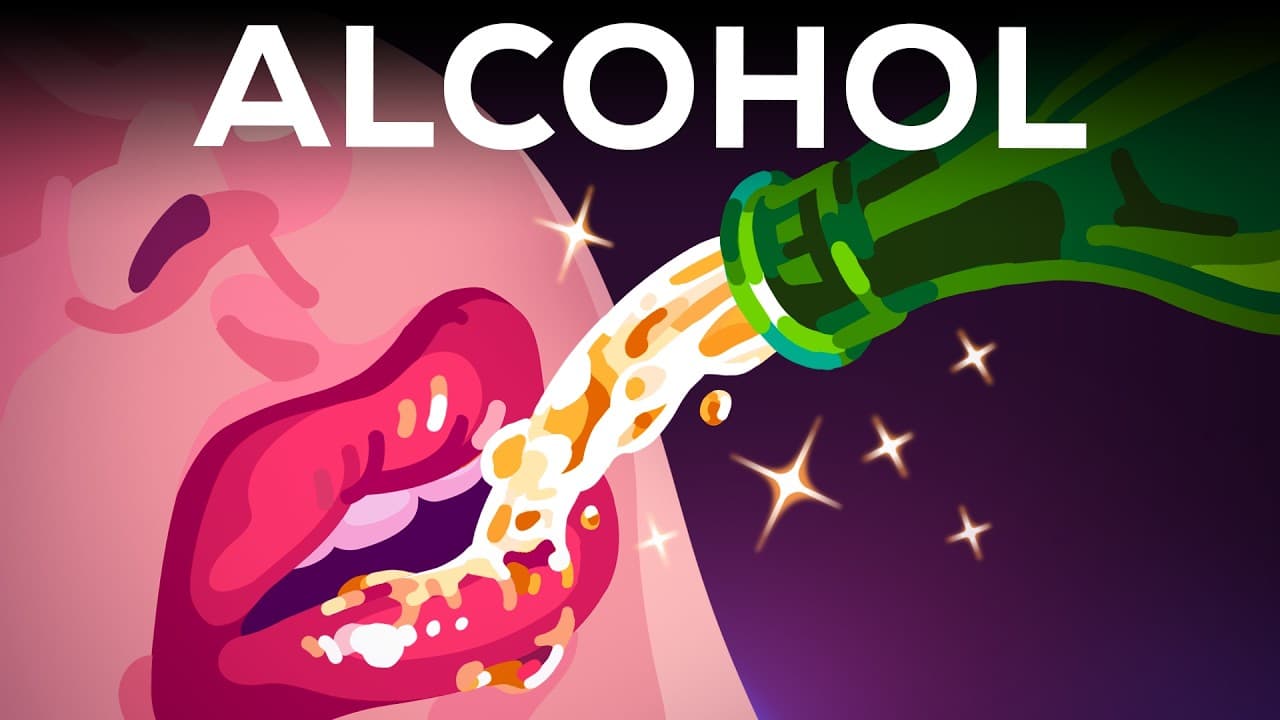
Alcohol is the most harmful substance on Earth, annually causing more deaths than terrorism, wars, homicides, and car accidents combined, injuring tens of millions, and trapping hundreds of millions in disease; its invention today would be unthinkable if it did not already exist.
More than 2 billion people consume alcohol, integrating it into various social occasions and emotional states, creating a paradox where society clings to the substance that inflicts the most harm.
Alcohol functions as a biological weapon produced by yeast during fermentation to eliminate competitors, then mixed with water and flavors for human consumption.
After a single sip, sextillions of alcohol molecules quickly flood the stomach and small intestine, traveling to the liver, which can only process about one sip every five minutes, leading to an overwhelming inundation of the brain if consumption is faster.
In the brain, alcohol molecules disrupt neurotransmitters and receptors, numbing neurons, making them slower, and interfering with their communication through complex, not fully understood, mechanisms.
Alcohol induces sedation, melts away tension and stress, stuns the prefrontal cortex to impair decision-making and self-control, leading to disinhibition, and releases endorphins, fostering feelings of connection, courage, and making social interactions smoother and more enjoyable.
As regular consumption accumulates over years, alcohol molecules dissolve in water and fat to invade nearly every cell and tissue, transforming into acetaldehyde, a chemical even more toxic than alcohol, which wreaks havoc on tissues, cells, and DNA.
Chronic alcohol use shrinks neurons and severs their connections in the brain, hindering inter-brain communication, leading to memory loss, slowed thinking, and an increased risk of dementia, with greater damage occurring the younger one starts drinking and the more consumed per session.
Alcohol causes eight types of cancer, affecting areas from the mouth to the bowel, and including breast cancer in women, with risks beginning at less than one glass of wine per day and accounting for approximately 740,000 new cancer cases and 400,000 deaths worldwide annually.
Alcohol disrupts fat metabolism, causing fat to accumulate in liver cells, which often goes unnoticed as the liver slowly turns to fat, swells with inflammation, and begins to fail, eventually leading to largely irreversible cirrhosis, responsible for 600,000 deaths each year.
Drinking alcohol weakens the heart, raises blood pressure, and increases the risk of stroke and thrombosis, contributing to an additional 500,000 deaths from cardiovascular diseases annually.
Alcohol damages cells throughout the body, including skin cells, leading to premature aging, and its high calorie content coupled with appetite stimulation significantly contributes to weight gain and obesity, which can trigger a cascade of further health problems.
Health problems can begin with approximately one beer a day, with the chances of premature death rising significantly at around three beers a day for men and less than two for women, consumption levels often exceeded in Western countries.
Alcohol causes a staggering number of accidents, as its numbing and disinhibiting effects lead to reckless behavior, resulting in 500,000 deaths annually, 300,000 of which occur in car accidents where more than half of the victims did not drink.
Alcohol is a major contributor to violence, ranging from pub brawls to domestic abuse, brutal assaults, and murder, with approximately 50% of all violent crime and sexual assault being committed by drunk offenders, causing about 100,000 deaths each year.
Dozens of millions are physically harmed by someone else's drinking every year, including 500,000 adults injured in England by drunk people and 800,000 hurt in violent attacks by drunk offenders annually.
Approximately 600,000 babies are born annually with fetal alcohol spectrum disorder, a devastating lifelong condition directly caused by alcohol consumption during pregnancy.
An estimated 400 million people, or 1 in 14 adults, have crossed the line into alcoholism, defined by real harm to self or others, with consistent consumption patterns like 8 beers per week for women or 15 for men indicating high risk.
More than half of individuals with alcoholism, equating to 1 in 20 adults in Europe and the Americas, fall into the deeper trap of physical or psychological dependence, where alcohol becomes a perceived necessity.
Alcoholism often remains undetected, with up to 50% of alcoholics, including unproblematic young adults and successful middle-aged professionals, flying under the radar by fulfilling obligations and showing no immediate health conditions despite regular heavy drinking.
Humanity formed a 'pact' with alcohol, leveraging it as a real and effortless solution to navigate the anxieties and awkwardness of human interaction, fostering closeness despite inherent reservations.
Studies confirm that modest quantities of alcohol help strangers bond, and individuals who drink moderately and socially tend to have more friends, closer friendships, and higher levels of trust in others, making it a perfect social lubricant.
Younger generations, particularly Gen Z, are significantly reducing their alcohol intake compared to previous generations, leading to positive outcomes like fewer accidents, hospitalizations, and derailed lives, as evidenced by drops in trial rates and binge drinking.
Simultaneously with falling alcohol consumption, there has been a significant decline in young people's daily interactions with friends, party attendance, dating, and casual sex, alongside a rise in loneliness and mental health issues.
The massive gain in popularity of drugs like weed, which often lead to decreased energy, increased social awkwardness, and greater loneliness, may be a contributing factor to changing social dynamics, contrasting with alcohol's traditional role in facilitating social engagement.
While alcohol has served as a powerful tool for sharing, celebrating, and connecting for millennia, the West's path to drinking less suggests a future where humanity connects and rejoices without a 'poisonous chemical crutch', challenging individuals to discover new methods of building confidence and relationships.
Strengthening confidence and fostering connections can be achieved by pursuing passions, working towards future goals, and investing time in personal dreams, such as starting a new business.
Odoo provides comprehensive business management software with applications like accounting, project management, and HR, all centralized on a single platform to improve productivity and adapt to evolving business needs.
Odoo's eCommerce application enables users to set up an online store in minutes using an intuitive drag-and-drop editor, easily adding products with images, descriptions, and customizing layout, along with fine-tuning backend essentials like taxes, payment methods, and shipping options.
Users can try Odoo for free, with the first application remaining free forever, including unlimited hosting and support, empowering individuals to take the first step in starting a business without initial cost.
No other drug is so widely accepted, casually consumed, and easily ignored, making alcohol uniquely dangerous.
| Insight | Detail | Statistic_or_Impact |
|---|---|---|
| Global Harmfulness | Alcohol is the most harmful substance on Earth, exceeding combined deaths from terrorism, wars, homicides, and car accidents. | Kills more people than terrorism, wars, homicides, car accidents combined annually. |
| Societal Paradox | Despite extreme harm, alcohol is deeply integrated into social life and widely consumed by over 2 billion people as a 'social lubricant'. | Deemed 'unthinkable' to invent today if it didn't exist; over 2 billion people drink regularly. |
| Biological Toxicity | Alcohol (ethanol) is a yeast-produced biological weapon that transforms into the even more toxic acetaldehyde in the body, damaging tissues, cells, and DNA. | Acetaldehyde is more toxic than alcohol itself. |
| Brain Damage (Long-term) | Regular drinking shrinks neurons, severs connections, impairs communication, slows thinking, fades memories, and increases the risk of dementia. | Younger age and binge drinking significantly worsen brain damage and cognitive decline. |
| Cancer Risk | Alcohol causes 8 types of cancer (mouth to bowel, breast in women), with risks starting from less than 1 glass of wine/day. | 740,000 new cancer cases, 400,000 deaths annually globally. |
| Liver Disease | Disrupts fat metabolism, leading to fat accumulation, inflammation, and irreversible cirrhosis. | 600,000 deaths annually from alcohol-destroyed livers. |
| Cardiovascular Risk | Weakens the heart, raises blood pressure, and increases the risk of stroke and thrombosis. | 500,000 deaths annually from cardiovascular diseases. |
| Harm to Others (Accidents) | Alcohol causes a staggering amount of accidents due to numbing and disinhibition, leading to risky behaviors. | 500,000 deaths from alcohol-fueled accidents annually (300k in car crashes, often involving non-drinkers). |
| Harm to Others (Violence/Crime) | Alcohol is a major cause of violence, including domestic abuse, assaults, and murder, with drunk offenders committing about 50% of violent crime. | 100,000 deaths from alcohol-fueled crime annually. |
| Innocent Bystanders/Vulnerable | Millions are physically harmed by someone else's drinking, and prenatal alcohol exposure leads to Fetal Alcohol Spectrum Disorder (FASD). | Dozens of millions physically harmed; 600,000 babies born with FASD annually. |
| Alcoholism & Dependence | An estimated 400 million people (1 in 14 adults) are alcoholic; over half are physically/psychologically dependent. | Up to 50% of alcoholics may 'fly under the radar', maintaining successful lives. |
| Generational Shift | Younger generations (Gen Z) are significantly reducing alcohol consumption, leading to fewer negative outcomes. | 25% drop in 18-year-olds who tried alcohol; 50% plummet in adolescent binge drinking. |